Discover the must-have dashi packets for authentic Japanese dishes, where to find them in Japan, and tips for choosing the best options.
Getting to Know Dashi Packets
Dashi packets are an essential find for anyone venturing into Japanese cuisine. They represent the simplest method for creating a savory stock that serves as the foundation for various dishes, including traditional miso soup and hot pots. Just steep a packet in hot water for about five minutes, and voilà—you're ready to enrich your meals with authentic flavors. This article lays out how to select these packets, where to discover them in Japan, and culinary suggestions for when you bring them home.
The Case for Dashi Packets in Your Kitchen
If you're serious about cooking Japanese food, dashi packets should be a staple in your kitchen. They’re lightweight, shelf-stable, and transport easily, making them perfect souvenirs. Dashi offers a deep, umami-rich flavor that’s often compared to what you find in beef or chicken stock. Personally, I favor these packets over instant dashi powders because they typically lack additives and preservatives, bringing you a taste closer to homemade stock. Here’s why they deserve space in your suitcase when you visit Japan:
- Unmatched Variety. Japanese supermarkets offer a plethora of dashi choices, from everyday brands to rare regional varieties.
- Local Flavors. Travel to Kyushu for unique flying fish dashi or to Hokkaido for specialty kombu types.
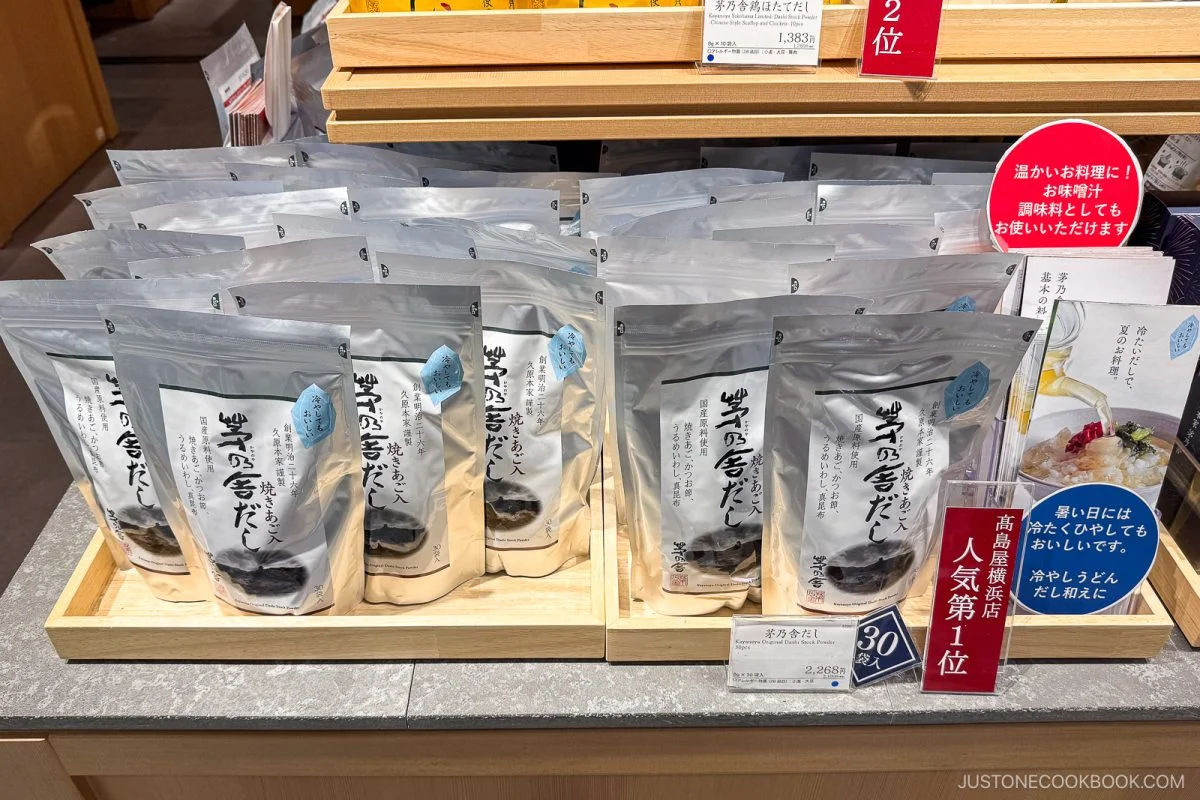
- Additive-Free Options. Brands like Kayanoya and Yamaki offer packets that you might struggle to find outside Japan.
Where to Buy Dashi Packets in Japan
When looking to stock up, grocery stores across Japan are filled with options. However, certain locations stand out:
- Supermarkets. Look for chains like LIFE and AEON, where you can find a variety of dashi products all in one place. Check the aisles labeled 出汁 or だし (dashi).
- Department Store Basements (Depachika). The food halls at department stores such as Isetan and Mitsukoshi are treasure troves of high-quality dashi that make for excellent gifts. Don’t miss the Shinjuku ISETAN Food Floor.
- Specialty Stores. Shops like Kayanoya and Ninben provide a vast selection that includes seasonal varieties you won’t find in typical stores.
- Travel hubs. For last-minute souvenirs, Kayanoya has counters at places like Tokyo Station and various airports.
How to Choose Your Dashi Packet
Stepping into Japanese stores can be intimidating, but with a bit of guidance, you'll easily navigate your choices. It’s essential to find a dashi packet that aligns with your cooking goals back home. For beginners, I recommend starting with
Awase Dashi, a versatile blend of bonito flakes and kombu that works well in numerous dishes.
As you explore, you may encounter various types:
-
Katsuo Dashi for a rich, smoky flavor, perfect for clear soups.
-
Kombu Dashi made entirely from kelp, ideal for lighter vegetable dishes.
-
Vegan Dashi, a flavorful plant-based option for those looking to avoid animal products.
Keep an eye out for packaging labeled with the characters 無添加 (mutenka) to ensure you're picking additive-free options, steering clear of artificial enhancers like MSG—this will help retain that fresh, homemade dashi flavor you’re aiming for.
Making Dashi at Home
After returning home, you’ll want to reproduce the delightful meals you had in Japan. Using a dashi packet is refreshingly simple. Just follow these steps:
1. In a saucepan, combine 2 cups of water with 1 dashi packet—don’t open it; treat it like a teabag.
2. Bring the water to a boil over medium heat. You can gently shake or press the packet for extra flavor once it begins to bubble.
3. Lower the heat and simmer for 2–3 minutes.
4. Remove the packet, and your dashi is ready to enhance your dishes.
You can store any leftover dashi in the fridge for up to four days. If you want a deeper dive into techniques, including a video guide, check out my
Dashi Packet recipe.
Incorporating dashi packets into your cooking isn’t just about convenience; it’s a way to connect with the tastes and traditions of Japanese cuisine right in your own kitchen.
Final Thoughts on Dashi Packets
Ultimately, if your goal is to bring authentic Japanese flavors to your kitchen, dashi packets are a no-brainer. They’re lightweight, affordable, and nearly foolproof—perfect for anyone wanting to experiment with Japanese cuisine. You’ve probably experienced that unique umami burst that dashi brings to a dish. This isn't just a seasoning; it’s the soul of various beloved recipes. From a comforting bowl of homemade miso soup to that perfectly rich tamagoyaki you’ve savored at a hotel breakfast, dashi is what pulls everything together.
What’s significant here is how straightforward it is to incorporate this foundational ingredient into your cooking. You don’t need to spend hours making stock from scratch when a simple packet can elevate your dishes significantly. But here’s the catch: choosing the right packet matters. Not all dashi is created equal, and while the convenience of dashi powder might tempt you, it often lacks the nuanced flavor that a packet offers. If you want authenticity, stick to those steeping packets.
Over time, you'll likely find yourself reaching for dashi packets more often than you expected. And that’s where the real fun begins. With your acquired taste for high-quality dashi, you’re equipped to tackle traditional dishes like okonomiyaki or nikujaga in your home kitchen. The memories of dining in Japan can come alive with just a sprinkle of dashi.
As you restock, remember to keep an eye out for specific brands that excel in flavor and quality. You can find reputable options like Kayanoya or Yamasan on platforms like Amazon, bringing the essence of Japan right to your doorstep. Consider experimenting with different recipes that utilize dashi—it’s a gateway to a more authentic experience.
So the next time you're shopping, don’t overlook those dashi packets. They may just be the key to not only nostalgic meals but also new culinary adventures. If you’ve got a trip planned to Japan, you’ll certainly want to pack up several packets to take home. Trust me, your future culinary self will thank you.



Discussion
Sign in to join the discussion.