Taco Bell takes its visual identity onto the course
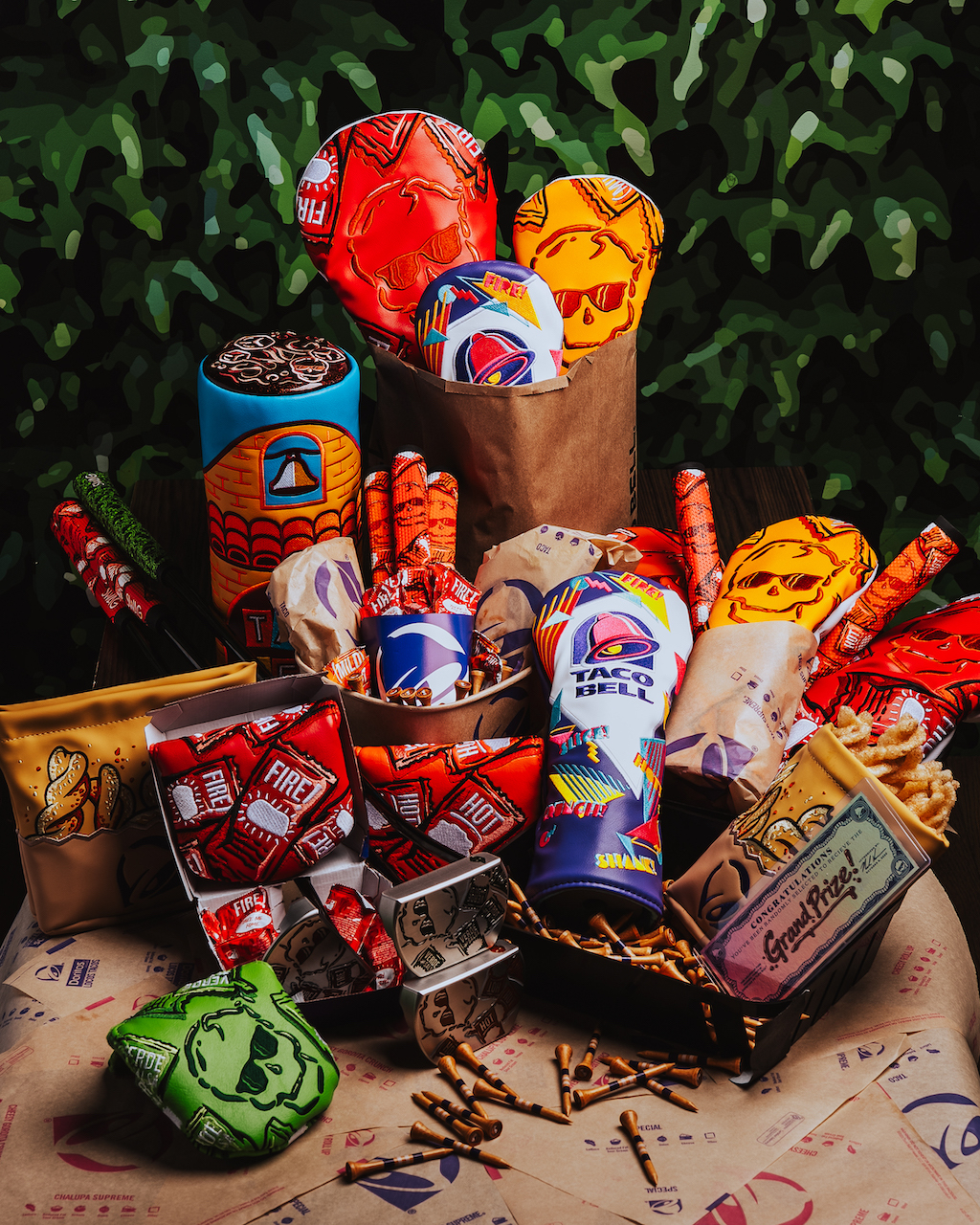
Taco Bell’s latest brand extension puts its identity on the golf course, pairing the fast food chain with equipment maker Swag Golf for a limited edition collection. The lineup brings the brand’s familiar visual flair to a sport where accessories often make as much of a statement as the scorecard.
That choice of setting gives the collaboration its central tension. Golf equipment is expected to work, but items carried or worn around a course also signal taste and personality; Taco Bell and Swag are building on that social role. The result is aimed at people who see a golf bag as something to customize, and who are comfortable carrying a fast food brand into a setting more commonly associated with traditional sporting labels.
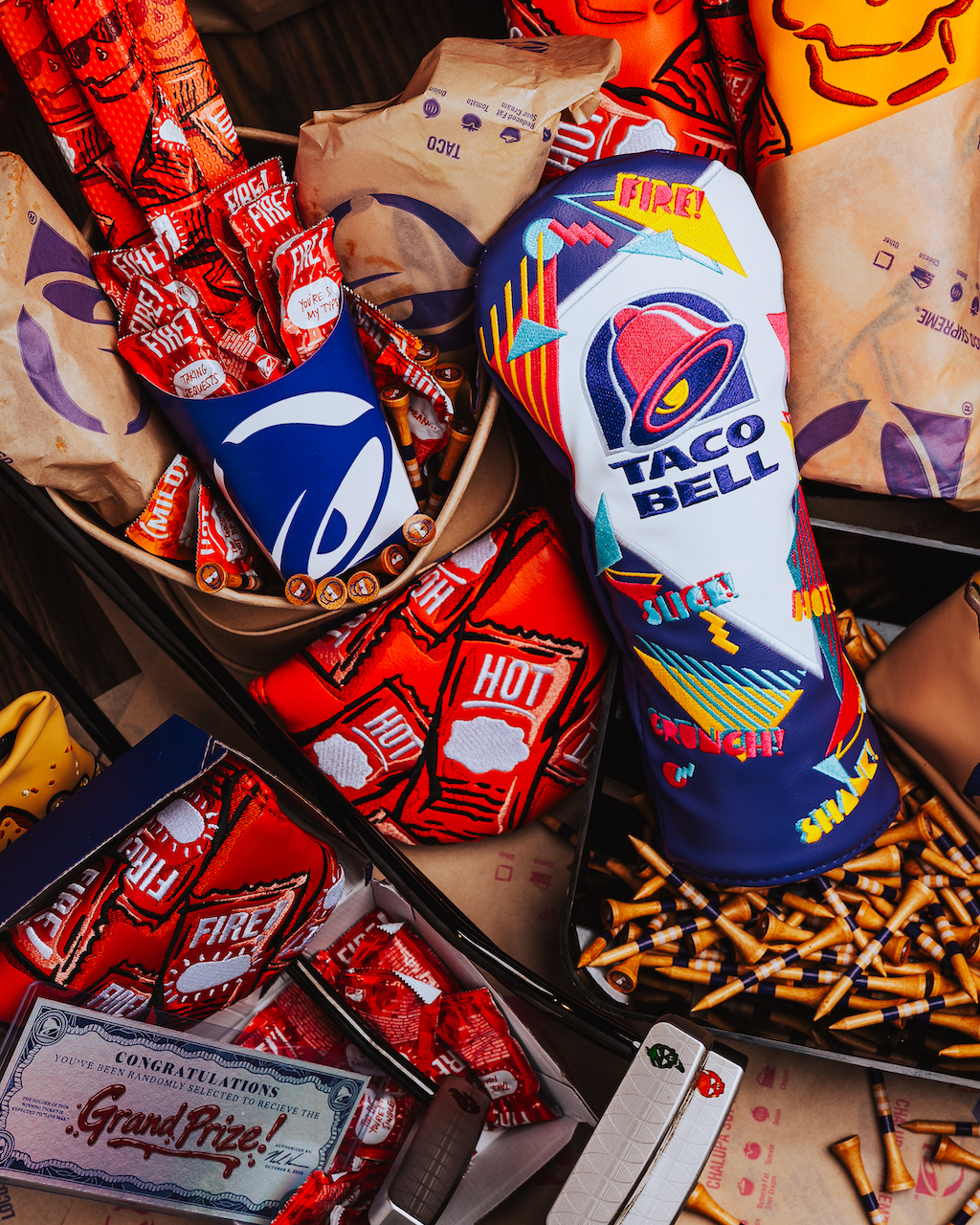
The range includes custom headcovers, putter grips, gear pouches and engraved putters, with designs drawing on Taco Bell and its Crunchwrap Supreme. Each item translates a recognizable part of the restaurant’s identity into golf gear, where a logo or graphic can be visible throughout a round. The Crunchwrap reference makes the food connection especially direct. A headcover protects a club; it also turns that club into a small display of allegiance.
The collaboration plays up the distance between golf’s polished traditions and Taco Bell’s association with late night cravings, giving the gear its appeal beyond utility. That contrast is doing real work here. A conventional equipment partnership might emphasize performance credentials, but the details supplied for this collection point instead to visual personality and humor. The appeal depends on a buyer enjoying the mismatch as much as the objects themselves.
A familiar playbook for both brands
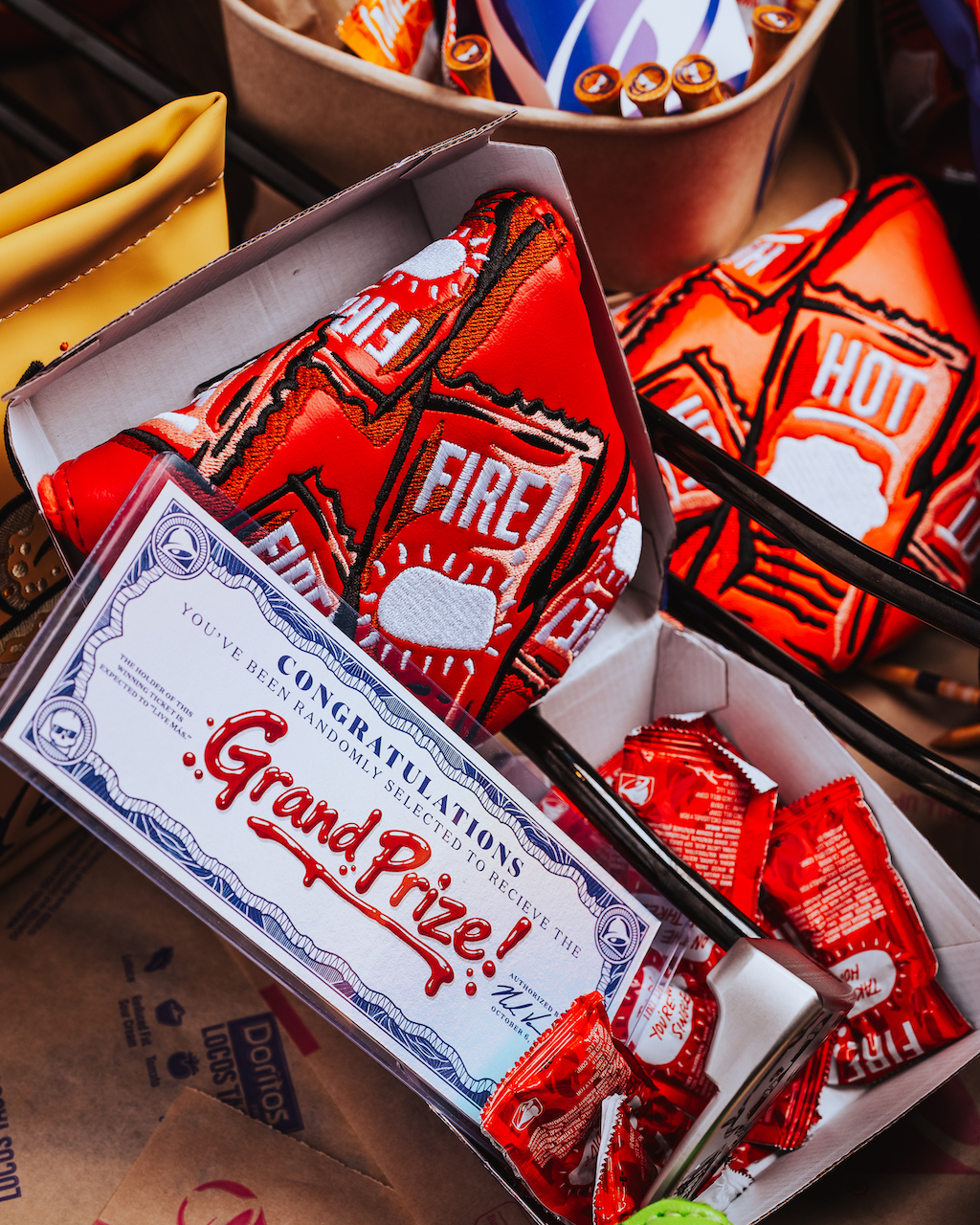
Swag Golf is also offering one fan the chance to win $2,222.22 worth of Taco Bell. The precise prize amount adds a playful hook to the launch—and enough food to make sharing a practical option.
The giveaway extends the collaboration beyond the people likely to buy golf accessories. Its oddly specific value fits the light tone of the collection and gives fans a reason to engage even if they aren't shopping for a putter grip or headcover. The prize is promotional theater, but a simple and legible kind: the brand partnership becomes something a participant can try to win, rather than just a set of products to view.
Founded by four friends aiming to shake up the putter business, Swag Golf built a following with equipment and accessories featuring skulls, playing cards and pop culture references. The company’s irreverent designs have also made their way into competitive golf.
That mix matters because novelty alone can make a collaboration feel like a logo pasted onto an unrelated product. Swag’s established visual approach gives the Taco Bell collection a more natural home: the golf company already works with designs that depart from restrained, traditional styling. This doesn't tell us how the new gear performs or how widely it will sell, but it does explain why the pairing is more coherent than a simple licensing deal might be.
PGA Tour golfer Nick Hardy used a Swag Golf prototype putter in his 2023 Zurich Classic victory. The brand has also worked with Bryson DeChambeau on custom headcovers for his Crushers team and was Team USA’s official bag partner at the 2025 Ryder Cup.
Those examples give Swag a foothold in both golf culture and competition. They don't establish that every product has a performance advantage, and the Taco Bell release isn't presented as a technical breakthrough. The more modest point is that Swag's custom work has appeared in settings where equipment gets noticed, giving the company a platform for partnerships that trade on appearance and identity.
What the collaboration signals
The Taco Bell release extends Swag Golf’s run of collaborations while giving the restaurant chain a new setting for its visual identity. The pairing suggests there’s room on the course for gear that treats personal style as part of the game.
This is more significant than it looks as a branding exercise. A restaurant logo on golf accessories asks fans to carry the brand into a leisure activity, turning recognition into a personal choice rather than a passing advertisement. For Taco Bell, that creates a point of contact outside the restaurant; for Swag, it adds another recognizable partner to a catalog built around distinctive designs. Neither effect guarantees lasting demand, but both are clear reasons the collaboration exists.
Here's the thing: the collection's success will depend on whether the products feel desirable after the joke lands. If you're working in this space, that's the useful test for any cross-category partnership: can the design make sense on its own, and does the partner bring an audience that wants to wear or use it? The listed items give the collaboration several ways to reach golfers, from a small accessory to an engraved putter.
And yet, the limited edition framing also narrows what can be inferred. The launch shows that the brands see value in combining Taco Bell's recognizable imagery with Swag's playful golf aesthetic; it doesn't reveal how many people will buy the gear or whether the partnership will continue. (And this is the part most people overlook.) A collaboration can matter as a cultural signal even when its commercial staying power is still unknown.
For now, the collection makes a straightforward proposition: golf gear can be functional and expressive, and the expression doesn't have to follow the sport's most traditional cues. A Crunchwrap on the course. That's the joke, and the product strategy.
Discussion
Sign in to join the discussion.