Cheerios and Honey Nut Cheerios are getting resealable bags with a pour spout, starting at Walmart before a nationwide rollout.
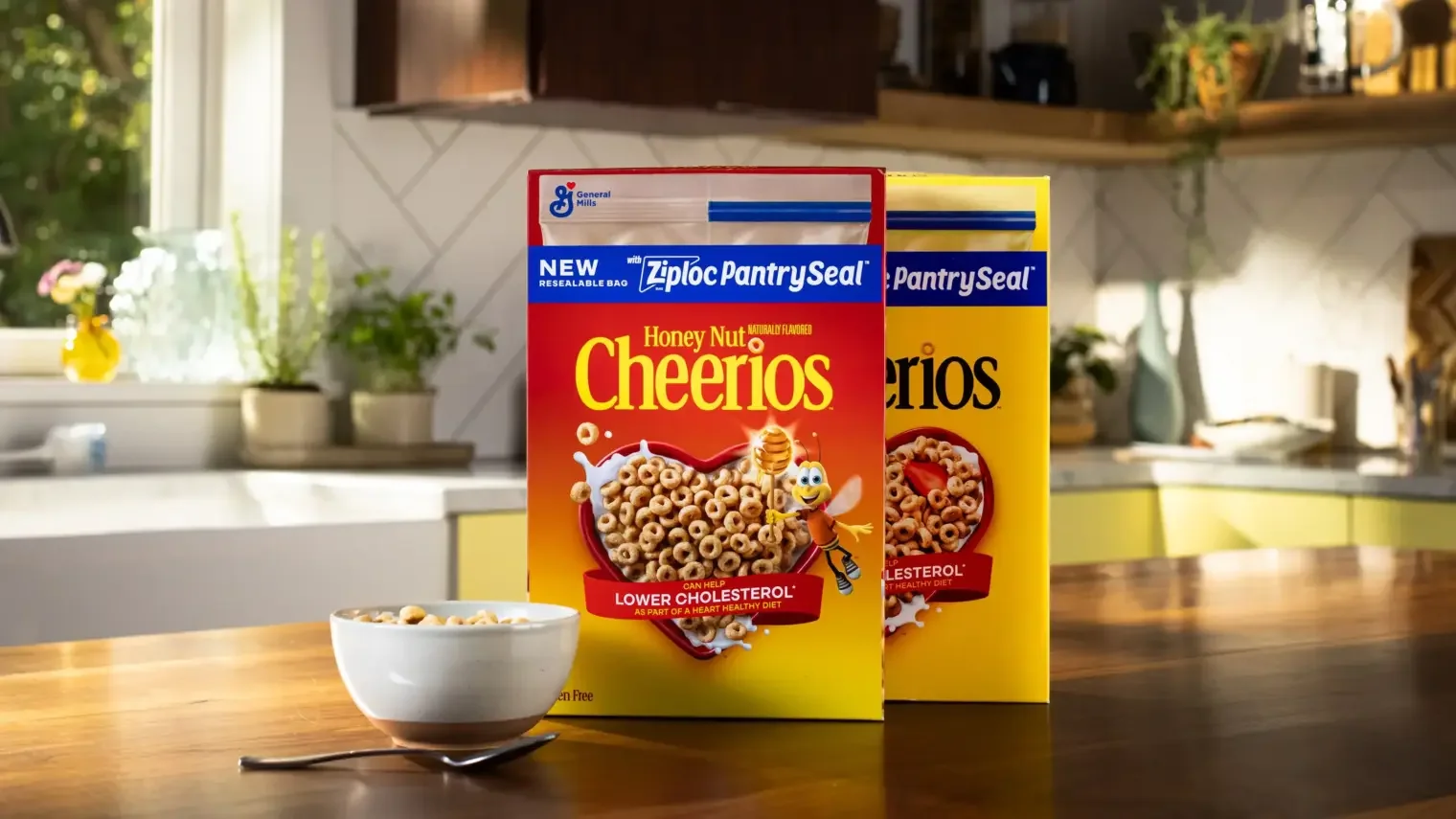
The humble cereal bag is getting a practical redesign. Cheerios and Ziploc have introduced PantrySeal, a resealable bag made to fit inside traditional cereal boxes, with a built-in pour spout for serving into bowls, cups or your hand. The change targets a small but familiar kitchen frustration: once the inner bag is open, keeping it closed often takes a fold, a clip or a twist that doesn’t stay put. PantrySeal keeps the familiar box on the outside while changing the part people handle every morning.
The package replaces the usual inner bag with a Ziploc-style closure, aiming to help cereal stay fresh longer. A closure can reduce exposure to air and humidity when it’s properly sealed, although the product description doesn’t establish how much longer cereal stays fresh or how the bag performs after repeated use. The built-in spout is meant to make pouring easier, too, and may help control how much cereal comes out. That’s a modest design improvement, but one tied directly to a routine people repeat day after day.
For now, PantrySeal is available only with Cheerios and Honey Nut Cheerios at Walmart. Both varieties are set to reach stores nationwide in the coming months. The rollout gives shoppers a chance to encounter the package through brands and a retail channel they already know, while leaving open questions about availability, price and whether the feature will extend to other products. The source doesn’t say whether the new bag changes the cereal’s price or how it compares with the standard package on shelf.
A small fix with room to spread
Cereal shoppers have long had to fold, roll or clip opened bags to keep them closed. The old format is simple to manufacture and fits neatly inside a box, but it leaves the consumer to create a seal after opening. That workaround can be awkward when the bag is full, when the box is stored in a crowded cupboard, or when someone wants to pour a quick serving without transferring cereal to another container. PantrySeal addresses that familiar annoyance with packaging built into the box format people already buy.
Here’s the thing: packaging changes have to work in ordinary kitchens, not just sound useful in a product announcement. A resealable strip is only helpful if it closes reliably, stays clean, and doesn’t become harder to use as the bag empties. The spout also has to pour neatly without making the package cumbersome to open or store. (And this is the part most people overlook.) Convenience depends on the whole sequence, from opening the box to closing the bag again, rather than on the presence of a zipper alone.
Why the package matters
Food packaging is part of how a product is used, not merely a wrapper around it. In this case, the box remains the familiar outer container, while the inner bag takes on jobs that consumers have often handled with clips or storage containers. That approach can make a change easier to understand: shoppers don’t have to switch cereal formats or learn a different way to store the box. The new feature sits where the old frustration already occurs.
There are limits to what the announcement tells us. It describes a resealable closure intended to help cereal stay fresh longer, but gives no measured shelf-life comparison, material details or evidence about how well the seal holds up over time. Those details matter because a package can promise freshness while still depending on careful use and storage. Until shoppers have had time to use it, the practical claim remains an aim rather than a demonstrated result.
Still, the concept fits a broader pattern in consumer packaging: manufacturers look for small changes that remove a repeated inconvenience without asking buyers to change the product itself. Similar redesigns often have to balance ease of use with production and retail requirements, since a package must protect its contents, fit familiar shelves and work at home. The source doesn’t explain how PantrySeal handles those tradeoffs, so its real significance will depend on performance and whether the format can be produced and adopted beyond a limited launch.
What comes next for cereal packaging
The open question is whether other cereals will adopt resealable bags or whether the feature will remain limited to these two Cheerios varieties. A wider rollout would suggest that the format has practical value for more than a narrow product range; continued availability in only these varieties would leave it as a useful but limited option. If you’re working in this space, the test to watch is whether the seal and pour spout earn repeat use, not just initial attention. That said, a small improvement can matter when it removes a nuisance people encounter every day.
This is more significant than it looks, though not because it transforms breakfast. It puts a common packaging complaint into a format that could be judged in ordinary use: does the bag close, does it pour cleanly, and does cereal stay in good condition? The answers will determine whether PantrySeal feels like a thoughtful fix or an extra feature attached to a familiar box. For now, the loose, hard-to-close inner bag may be overdue for an update. Small change. Familiar test.
Discussion
Sign in to join the discussion.