Atkins is recasting its low-carb, high-protein products for people who stop GLP-1 drugs, as the brand confronts steep sales declines.
A post-medication audience
Atkins is betting that people who stop taking GLP-1 drugs will become a new audience for its weight management products. The pitch gives Simply Good Foods a fresh way to talk about a brand whose sales have been struggling: help former users manage weight as they adjust to life after medication. That’s a clear marketing proposition, but it also asks Atkins to connect a medical treatment transition with packaged foods in a way consumers will find credible.
Many people discontinue GLP-1 drugs within a year, and weight regain is common after treatment ends. A 2025 study by the National Institutes of Health found that people may regain up to two-thirds of the weight they lost within a year of stopping medication. The finding points to a difficult part of weight management: the end of treatment doesn’t necessarily end the need for ongoing support. Morgan Stanley estimates that as many as 55 million Americans—about 15% of the population—could be taking GLP-1 drugs by 2035, nearly twice today’s total. That projected growth could also expand the group of people considering what comes after medication, though it doesn’t establish how many will seek food products as part of that transition.
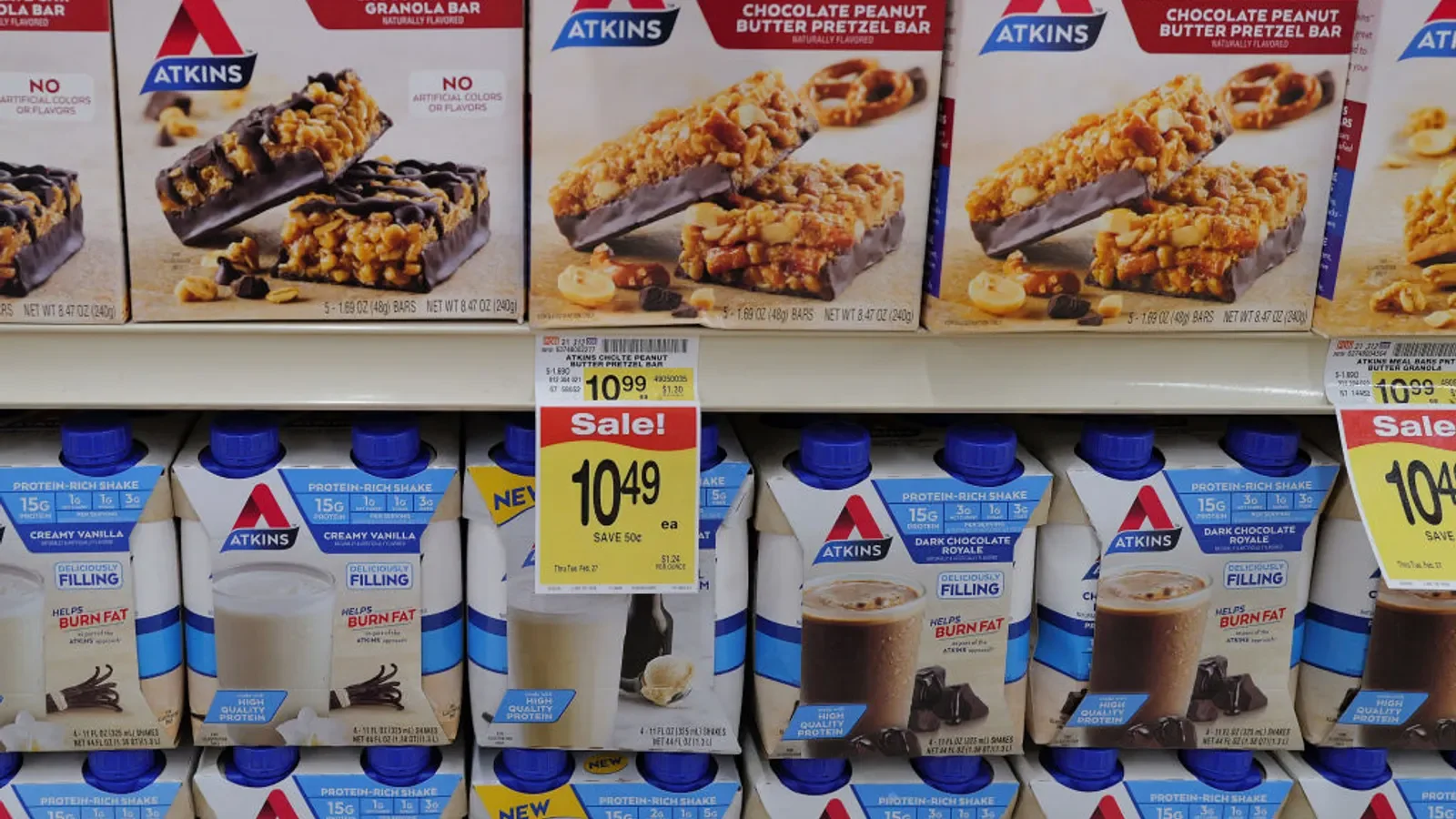
That creates a potential market for food brands focused on weight maintenance. Simply Good CEO Joseph Scalzo told analysts that Atkins has a long history of helping consumers maintain their weight, and could serve people who’ve stopped using GLP-1s. The company points to its low-carb, high-protein shakes, bars, confections and other products as options for consumers seeking nutrition after treatment. The product range gives Atkins several ways to frame the offer, from convenient snacks to drinks, but the company still has to show why those familiar products fit a new consumer need.
Scalzo described Atkins’ approach as giving consumers “the right balance of carbs, protein and fiber” to burn fat. He also said people coming off GLP-1s need nutrients and vitamins to maintain muscle mass and support their health. That language broadens the pitch beyond weight loss to nutrition and muscle maintenance, concerns that may matter to people changing or ending treatment. But the statements describe the company’s positioning; they don’t, on their own, establish that Atkins products can deliver a particular health outcome.
Marketing reset meets a sales slump
The new positioning arrives as Atkins faces a sharp downturn. Brand sales fell 20.9% in Simply Good Foods’ 2026 fiscal year. The company recorded a write-down in the value of its Atkins and Owyn brands before the fourth quarter, citing recent performance and revised revenue projections. Simply Good reported $1.4 billion in fiscal 2026 net sales, down 6.5% from the prior year. Those results put pressure on the company to make its marketing changes translate into a clearer reason for shoppers to return.
Simply Good is also changing how it presents Atkins to consumers. The company redesigned the brand’s website to add more science-based material and educational content, and expanded spending across streaming, digital, social media and influencer channels. Recent products, including whipped bars, are aimed at shoppers interested in weight management and nutrition. The approach combines a more explanatory brand voice with wider promotion, but more content and media spending won’t fix a weak product proposition by themselves. The test is whether consumers see a practical fit between the brand and the choices they’re making.
In September, Atkins launched a campaign aimed directly at people who have stopped GLP-1 treatment. Scalzo said it “promises to help lapsed GLP-1 users keep the weight off” and addresses concerns about maintaining weight loss over time. The directness may help the brand stand out, since it names a specific moment in a consumer’s experience instead of relying only on broad weight-loss messaging. Here’s the thing: a campaign can make that moment visible, but it can’t guarantee that people will choose Atkins or stay with it.
The repositioning is part of a broader effort to get Simply Good’s brands back on track. At the company’s fourth-quarter earnings call, Scalzo said its brands “were not performing to their potential … and our financial results were falling short of our expectations.” He returned as CEO in January and has outlined priorities that include reshaping marketing and directing cost savings back into the brands. That makes the Atkins campaign one piece of a larger business reset, with the company trying to improve how it presents its products while responding to disappointing results. The strategy will need to support a more persuasive customer offer, not just a more polished one.
What the bet has to prove
For Atkins, the opportunity depends on turning a broad health concern into a repeatable shopping decision. People who stop medication may be looking for different forms of support, and similar changes in treatment often leave consumers weighing how to sustain their progress. But that doesn’t mean they’ll see a branded shake or snack as the answer. Atkins has to make the connection understandable, relevant and worth paying attention to across the products it already sells.
This is more significant than it looks: Atkins is trying to reposition its identity around what happens after a drug, not simply around its long-standing weight management offer. That could give the brand a more specific role with consumers. It could also leave the company exposed if the campaign’s promise feels more compelling than the products behind it (and this is the part most people overlook). The medical context raises consumer expectations, while the company’s sales decline makes the commercial stakes plain.
If you’re working in this space, the useful question isn’t only how many people might stop GLP-1 treatment; it’s whether brands can earn a place in their routines afterward. Atkins has a recognizable product range and a message tied to weight maintenance, but it still needs to demonstrate that the proposition resonates beyond the campaign. A different audience. A harder test.
Atkins is tying its next chapter to a growing group of consumers navigating life after GLP-1 medication. Whether that message can reverse the brand’s sales decline will depend on turning a medical transition into a lasting reason to choose its products. That said, the company’s own results show why the distinction matters: a large potential audience isn’t the same as renewed demand. The bet is plausible; the outcome remains unproven.
Discussion
Sign in to join the discussion.