Château La Tour Figeac combines a storied past with modern vineyard practices, crafting wines that reflect their rich terroir and changing climate.
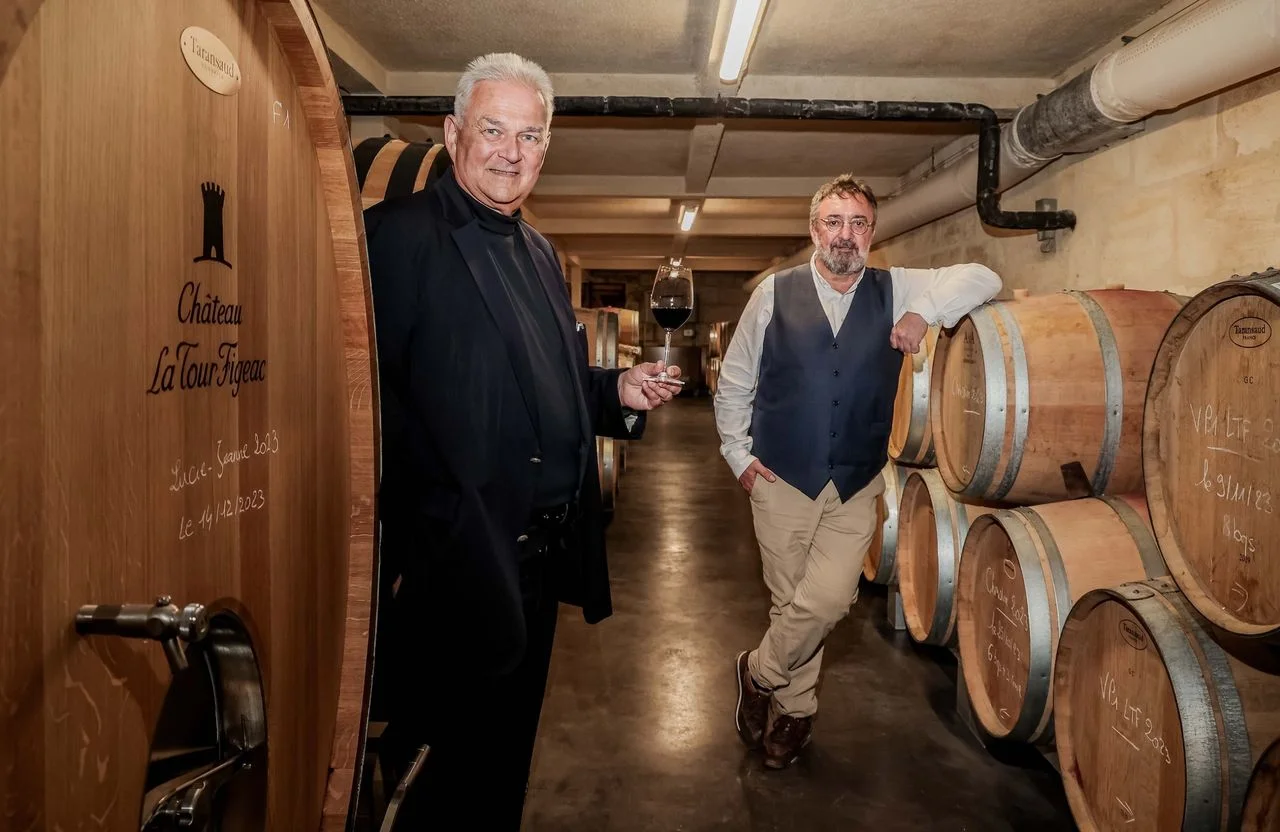
Despite its name suggesting a tower, Château La Tour Figeac lacks this feature. The name originates from an old mill that once overlooked a well on the estate. Today, only the well remains, a testament to the vineyard's historic roots.
The estate was formed from the division of the larger Château Figeac, which underwent sales in 1876 and 1879. It was in the latter year that the Corbière family acquired a plot, establishing Château La Tour Figeac. Shortly after its creation, the estate was partitioned again in 1881, leading to the development of La Tour du Pin Figeac, which still stands as a separate entity.
Since 1973, ownership of Château La Tour Figeac has shifted to the Rettenmaier family from Heilbronn, who had connections with the von Neipperg family, owners of Château Canon La Gaffelière. The family's principal business involves specialized transportation, under TII Group (Transporter Industry International). Otto Maximilian Rettenmaier, the current proprietor, took over management of the estate in 1994, leading to a greater emphasis on viniculture. Today, Otto holds a 50% stake, while his father’s eight grandchildren share the remainder. With only one of Otto's daughters showing interest in the vineyard, the future direction of the estate remains uncertain.
Prestigious Neighbors
Château La Tour Figeac is nestled in a prime location known for its adjacent illustrious estates. To the east lies Château Cheval Blanc, to the south is Château Figeac, and just a short distance to the north and west, the renowned region of Pomerol begins. The estate has held the distinction of Grand Cru Classé since the inaugural Saint-Émilion classification in 1955.
Covering 14.5 hectares, the vineyard comprises 60% Merlot and 40% Cabernet Franc, cultivated in sandy clay and gravelly soil over a clay base. Although the average vine age is cited as around 35 years, recent replantings mean this figure requires reevaluation. Currently, roughly 2.5 hectares have been uprooted, with another 3 hectares under consideration, a response driven by both market demands and climate factors.
A planting density of approximately 6,500 vines per hectare is standard, though newer plots have reached as high as 7,900 vines. Future planting strategies will favor wider spacing, aligning more closely with earlier averages of around 6,700 vines per hectare. This shift aims to improve adaptation to a warming climate, allowing vines more room to thrive and reducing competition for water resources.
Sustainable Practices
Despite the challenges faced in 2026, especially regarding irrigation for young vines, the estate has been committed to biodynamic principles since 1997, under the guidance of Derenoncourt Consultants and more recently, Julien Lavenu. While not certified biodynamic, Château La Tour Figeac incorporates elements of this philosophy without rigid adherence to its protocols. Initial organic certification was achieved for the 2021 vintage but was lost in 2024 due to noncompliance with organic treatment standards, and the estate is not currently undergoing reconversion.
Artistry in Winemaking
Hand-harvested grapes are meticulously sorted upon arrival at the winery. In difficult harvest years, a densimetric sorter is employed to assist in the meticulous selection process. Color and tannin extraction is accomplished through a combination of cap punching and pumping over techniques.
Fermentation occurs in both stainless steel tanks and wooden vats named after classical composers—Beethoven, Bach, Tchaikovsky, and Vivaldi, reflecting Otto's passion for music. Following primary fermentation, malolactic fermentation takes place in oak, conducted in a designated facility. The aging process for the premier wine typically spans 13 to 15 months, while the second wine ages for about 10 to 13 months, utilizing a blend of 225-litre and 400-litre barrels. Approximately 40 to 50% of these barrels are new, with one-third replaced annually.
Château La Tour Figeac produces around 60,000 bottles each year, all processed on-site. The estate's portfolio includes three different wines, with the Grand Vin making up the majority of production—between two-thirds and three-quarters. In most vintages, this is complemented by two second wines: L'Esquisse, derived from younger vines, and Cuvée Lucie 45, sourced from specifically chosen parcels.

Discussion
Sign in to join the discussion.