Discover the charm of Tokoroten, a traditional Japanese summer dish made from kanten, known for its unique textures and versatile flavors.
Tokoroten is more than just a dish; it's a cultural experience steeped in Japanese tradition. This beloved summer treat, made from kanten—agar-derived jelly—offers a unique blend of texture and versatility. Whether served sweet with kuromitsu syrup and kinako or savory with a vinegar-soy dressing, tokoroten satisfies a range of palates while remaining refreshingly light.
### Understanding Tokoroten
At its essence, **Tokoroten** (ところてん) represents a traditional culinary art form. The clear noodles, cut from firm kanten jelly, possess a delightful springiness and are known for their near-neutral flavor, making them an ideal canvas for various sauces. Typically, I prepare mine utilizing a wooden *tentsuki* press, akin to the traditional methods used by vendors in Japan. The result? Perfectly shaped strands that glide across the palate, providing a cool counterpoint to the hot summer days.
### Why This Matters
You might wonder why all this hype over a simple noodle dish. Well, here's the thing: tokoroten embodies the Japanese philosophy of seasonality and simplicity. Each ingredient is chosen for its ability to highlight fresh flavors without overshadowing them. The meticulous process of boiling the kanten until it fully dissolves ensures a jelly that’s not too grainy or watery, achieving that pristine texture that is one of tokoroten’s defining characteristics.
### Key Features of Tokoroten
- **Traditional Preparation**: The *tentsuki* press not only ensures uniformity in the thickness of each strand but also enhances the aesthetic appeal of the dish, showcasing the craftsmanship involved.
- **Temperature and Texture**: Proper boiling time is non-negotiable—under-cooked kanten can destroy the dish’s integrity. It requires precision to achieve a satisfying firmness that’s both light and luscious to the bite.
- **Regional Variations**: Tokoroten shines in its adaptability. While Kanto's version leans toward a savory flavor profile with vinegar and soy sauce, Kansai offers a delightful sweet variation with rich kuromitsu and nutty kinako.
- **Quick Setting**: Unlike gelatin, this agar-based delicacy sets at room temperature, ensuring you're just an hour away from serving.
### Personal Connection in the Kitchen
Recreating tokoroten brings me back to conversations I've had with readers about the nostalgia tied to this dish. I recall a particularly insightful discussion with Naomi, our Community Manager, who shared heartfelt memories of crafting it from *tengusa* seaweed in her childhood home in Shikoku. Inspired by such stories, I wanted to craft a version using accessible ingredients readily found in the U.S. With a *tentsuki* press now available from our shop, the process has become more intuitive.
As you venture into making your own tokoroten, consider pairing it with my summer favorites, like Cold Miso Soup or Hiyashi Chuka, to expand your repertoire of refreshing dishes. It’s these layered connections—from preparation to presentation—that elevate tokoroten beyond just a snack.
So, if you’re looking to enjoy a simple yet sophisticated dish this summer, give tokoroten a try. It’s a culinary tradition that resonates with flavor, history, and cultural significance—truly a meal worth savoring.
Crafting the Kanten Jelly
To begin the process, you’ll want to create your base using kanten powder and water. Combine these ingredients in a saucepan and heat them just until they reach a gentle boil. It’s crucial to let it simmer for a couple of minutes to ensure the powder is fully dissolved. After that, carefully pour the mixture into a nagashikan — a mold with a removable base, or any glass container you have on hand. Let it cool for about an hour at room temperature before covering it with plastic wrap. The final step is to refrigerate this jelly for a minimum of three hours, or preferably overnight, until set and chilled.
Releasing the Jelly
When the jelly is fully chilled, it’s time to un-mold. Start by running a knife carefully around the edges of the mold to loosen the jelly. If you’ve used a nagashikan, pull the insert up along with the jelly. If you’ve opted for a glass container, transfer the jelly to a cutting board for the next steps.
Slicing and Pressing for Perfection
Next, you’ll cut the jelly into rectangular blocks that will fit snugly into your tokoroten press, or tentsuki. It’s advisable to trim the blocks to about 1–2 cm shorter than the length of the press chamber. This ensures they can slide through smoothly without getting stuck. Once cut, use the pressing stick to push each block through the press, transforming them into uniform, noodle-like strands.
Serving Up the Tokoroten
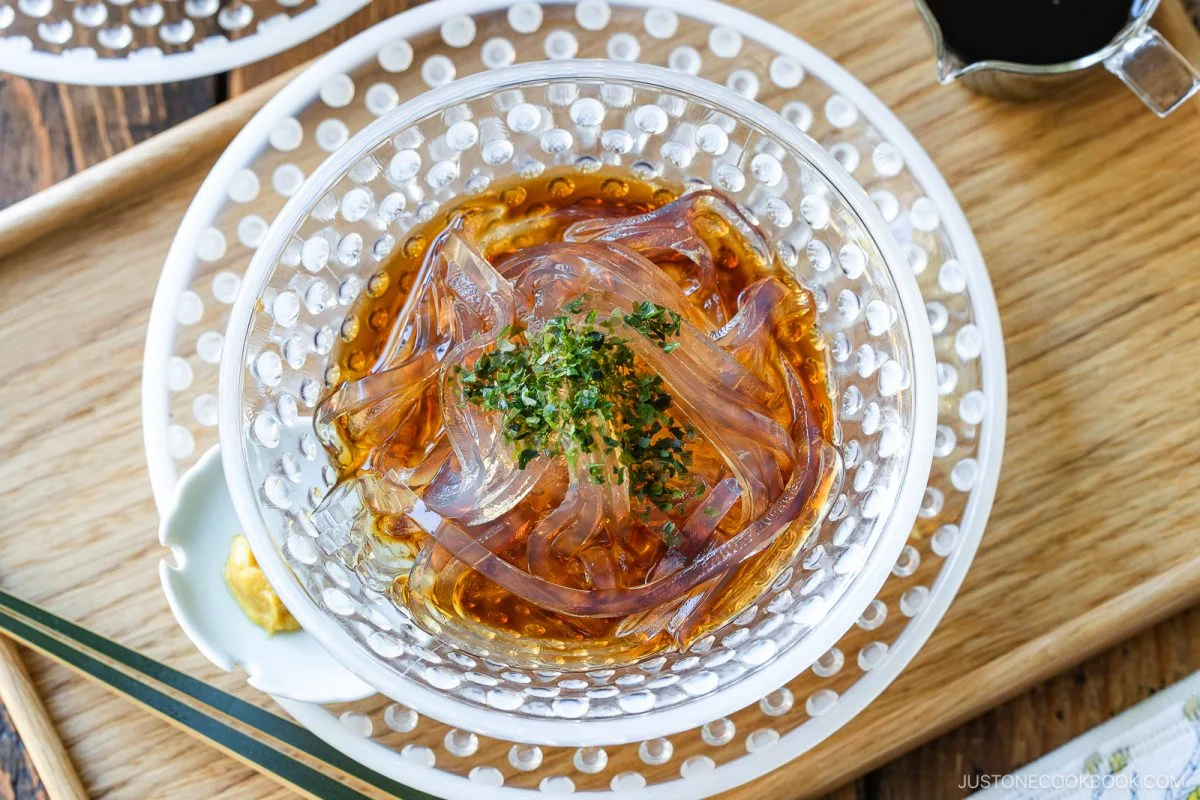
When it comes to serving, take portions of the freshly pressed tokoroten and place them in individual bowls. For a savory twist, drizzle a vinegar-soy sauce over the noodles, adding a sprinkle of aonori seaweed and a side of karashi hot mustard for an extra kick. Alternatively, if you're in the mood for something sweet, dust the tokoroten with kinako and finish it off with a drizzle of kuromitsu, a rich syrup that enhances the dish's flavor profile.
Final Thoughts on Tokoroten
As we wrap up our dive into tokoroten, it’s clear that this Japanese delicacy offers much more than just a culinary experience—it’s a reflection of regional traditions and personal tastes. The choice of toppings and styles varies dramatically across Japan, offering a unique glimpse into local preferences. For anyone exploring Japanese cuisine, understanding tokoroten's versatility is essential.
Regional variations cater to diverse palates. From the refreshing and tangy Kanto-style, featuring a soy-vinegar mix, to the sweet and rich Kansai version served with kuromitsu, each style tells a story. If you're working in culinary development or menu planning, recognizing these differences could inspire innovative dishes that tap into authentic flavors while resonating with regional identities.
The appeal of tokoroten extends beyond just its taste—it's about texture, presentation, and the ability to adapt. Whether served sweet or savory, this dish can easily transform based on the accompanying ingredients. You’ll find dishes that incorporate seasonal elements or local specialties, emphasizing the importance of what's fresh and available.
Lastly, for those interested in trying their hand at making tokoroten at home, the recipe guides provided throughout this exploration highlight not only how to create the dish but also how to experiment with toppings. From miso blends to citrus ponzu, the choice is yours. Don’t forget to share your culinary adventures. Your experiences could inspire others to embrace this delightful and adaptable dish!





Discussion
Sign in to join the discussion.