General Mills is adding Ziploc PantrySeal bags to Cheerios and Honey Nut Cheerios, targeting freshness and easier pouring as cereal brands compete for shoppers.
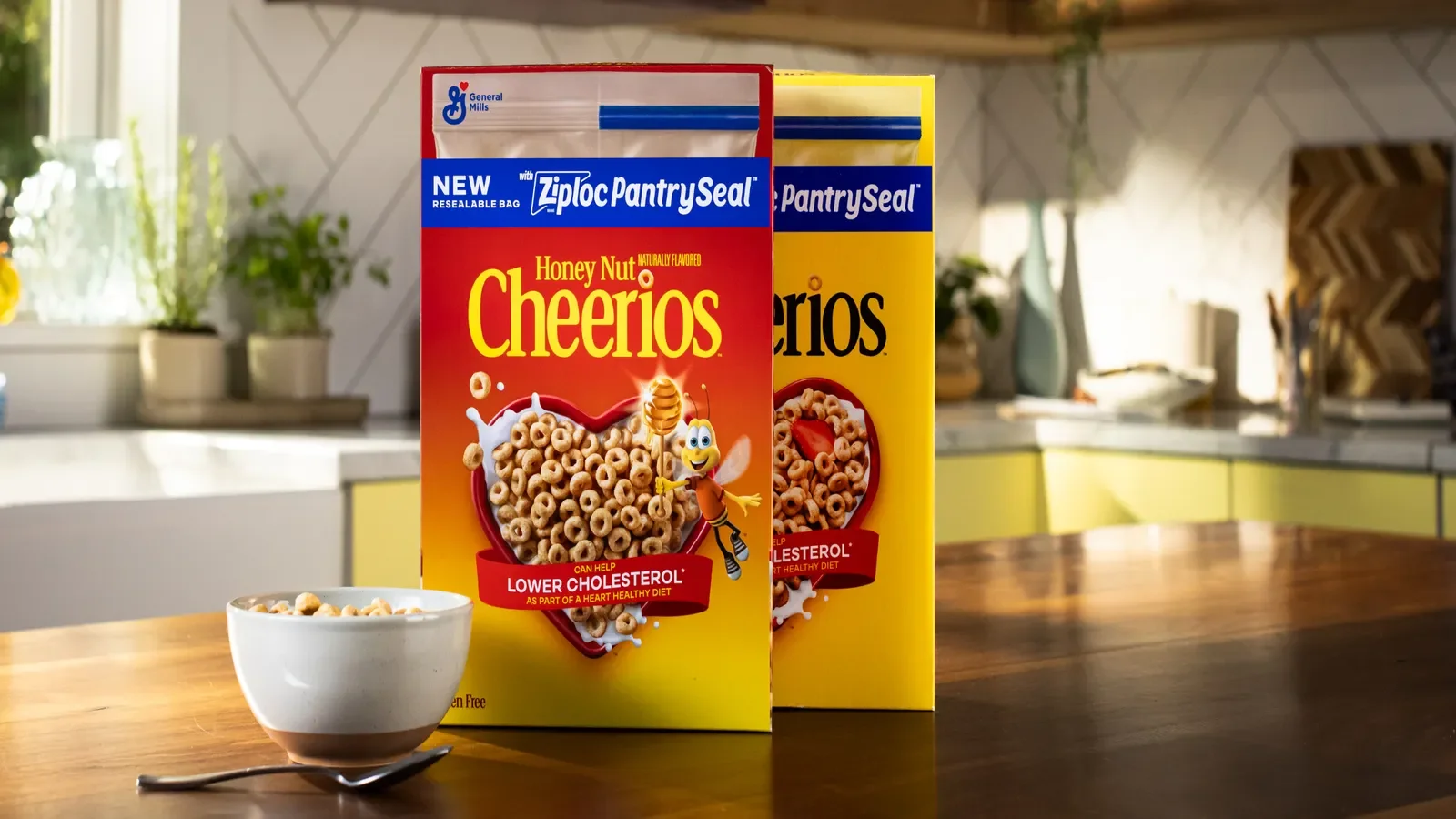
General Mills is changing a familiar part of the Cheerios experience: the inner bag. Its new Ziploc PantrySeal packaging adds a resealable closure and a pour spout, addressing a routine annoyance while giving the cereal brand a practical point of difference. The idea is modest by design: change the part of the package people handle every morning, rather than asking them to learn a new product or routine. That can make the benefit easy to judge after a single use. Whether it’s enough to shape a buying decision is a separate question.
A packaging fix shaped by shopper habits
The closure runs across about half the bag. Once opened, the package can form a spout intended to make pouring easier and reduce spills. General Mills describes it as the first resealable bag used inside a traditional cereal box. The format has two jobs, then: help keep cereal contained between uses and make it easier to transfer into a bowl. Those functions sound basic, but they address the moments when a standard bag can be awkward to handle.
The company says it receives hundreds of thousands of consumer requests, comments and reactions each year seeking ways to keep cereal fresh longer. It also estimates that 90% of shoppers take extra steps to preserve freshness, such as folding or rolling the bag, adding a clip, or transferring cereal to another container. Those habits suggest the box and inner bag haven’t always worked as a complete package: shoppers have been supplying their own closure. Still, the figures describe reported interest and behavior, not how many people would pay more or switch brands for a resealable bag. That distinction matters when assessing the likely reach of the change.
That makes the redesign more than a cosmetic refresh. It targets a repeated household workaround with a packaging change consumers can assess immediately. A better closure could cut down on loose clips, folded corners and cereal spilled during pouring; it could also make storage less of a chore for people who use the box over several days. The practical test is whether the seal is easy to close consistently and keeps working through ordinary use. “Cheerios with Ziploc PantrySeal takes a small, everyday cereal frustration and finally gives consumers the simple solution they've been asking for, making the whole routine easier and more enjoyable,” said Emilie Knox, Cheerios vice president and business unit director at General Mills. The claim is confident. The package itself will have to earn it.
Packaging as a competitive tool
Cheerios with Ziploc PantrySeal is available for Cheerios and Honey Nut Cheerios through Walmart’s e-commerce platform. General Mills says it will reach other retailers nationwide in the coming months. An online launch gives the company a way to put the new format in front of shoppers before its broader retail rollout, but availability alone won’t show whether the design changes purchasing behavior. That will depend on what people think when they open the box—and whether they notice the feature before buying it.
The launch comes as cereal makers work to make the category more appealing to consumers whose food choices and routines are changing. Cereal sales have declined over the past decade as some shoppers seek healthier foods, skip breakfast or choose portable alternatives such as bars. General Mills, WK Kellogg and Post Holdings have responded with product changes, including efforts to add nutrients such as protein. A packaging change addresses a different part of the challenge: the convenience of using the product once it’s in the kitchen. It won’t by itself answer every reason a shopper might choose something else for breakfast.
General Mills is applying that innovation effort to the package of its top-selling cereal brand, based on Nielsen data. The move also reflects the role packaging can play at the shelf: BusinessDasher data cited in the report found that at least 80% of consumers surveyed in 2024 had purchased a new product after noticing its packaging, while nearly three-quarters said packaging could affect their buying decisions. Roughly half said they had switched brands because of packaging. These survey findings point to packaging as a possible influence, though they don’t establish that a particular feature will cause shoppers to switch or stay. In Cheerios’ case, the feature has a clear use after purchase, which gives the company a chance to make the benefit more than a first-glance impression.
Packaging can also create a sales problem when it fails to meet basic expectations. Kraft Heinz said it was renovating Oscar Mayer deli packaging after the brand accounted for 60% of the company’s North American market share losses in the first half of the year. CEO Steven Cahillane told analysts resealability was “the vast majority of the problem” and said Oscar Mayer had “lost a lot of distribution” at retailers as a result. The comparison underlines a practical point: a package can affect the product experience and, in some cases, the brand’s position with retailers. Cheerios is approaching the issue from the other direction, adding a feature meant to make an established product easier to use.
What the rollout will show
For Cheerios, the test is whether a more useful bag can turn a small convenience into a reason to stay with the brand. This is more significant than it looks: packaging is one of the few parts of a familiar product that can change the daily routine without changing what’s inside the box. And yet a clever closure won’t make cereal more portable or resolve concerns about breakfast preferences. Its value is narrower, and that may be its strength. If you're working in this space, the question is whether a low effort improvement can make an ordinary product feel more considered.
As the package reaches more retailers, shoppers will get a chance to compare the promise with the experience: whether the spout pours cleanly, whether the closure is easy to use, and whether the cereal stays fresh to their satisfaction. (And this is the part most people overlook.) Small features can create small frustrations of their own if they’re awkward or inconsistent. The measure isn’t the novelty of the bag; it’s whether people keep using the closure instead of reaching for a clip or another container. A more convenient cereal routine. That’s the case General Mills is making, and the rollout will show whether shoppers agree.
Discussion
Sign in to join the discussion.