A new bet as beer volumes fall
Boston Beer is making a sizable bet on vodka ade as its traditional beer business slips. The company reported $520 million in third-quarter net revenue, down 3.2% from a year earlier. Its beyond-beer portfolio, meanwhile, grew 1% in volume year to date, while traditional beer volume fell 3%. Those figures point to a familiar challenge for a drinks company: newer products can add momentum, but they have to do enough to offset softness in established brands.
The gap between the two volume trends is modest, but it gives the company a reason to seek growth beyond beer. Revenue and volume measure different things, so these figures alone don't explain what drove the revenue decline or how each part of the portfolio performed financially. They do show that Boston Beer’s newer categories are moving in a different direction from its traditional beer business. That distinction helps explain why a product like Rally Dog could attract attention inside the company, even before it reaches a national audience.
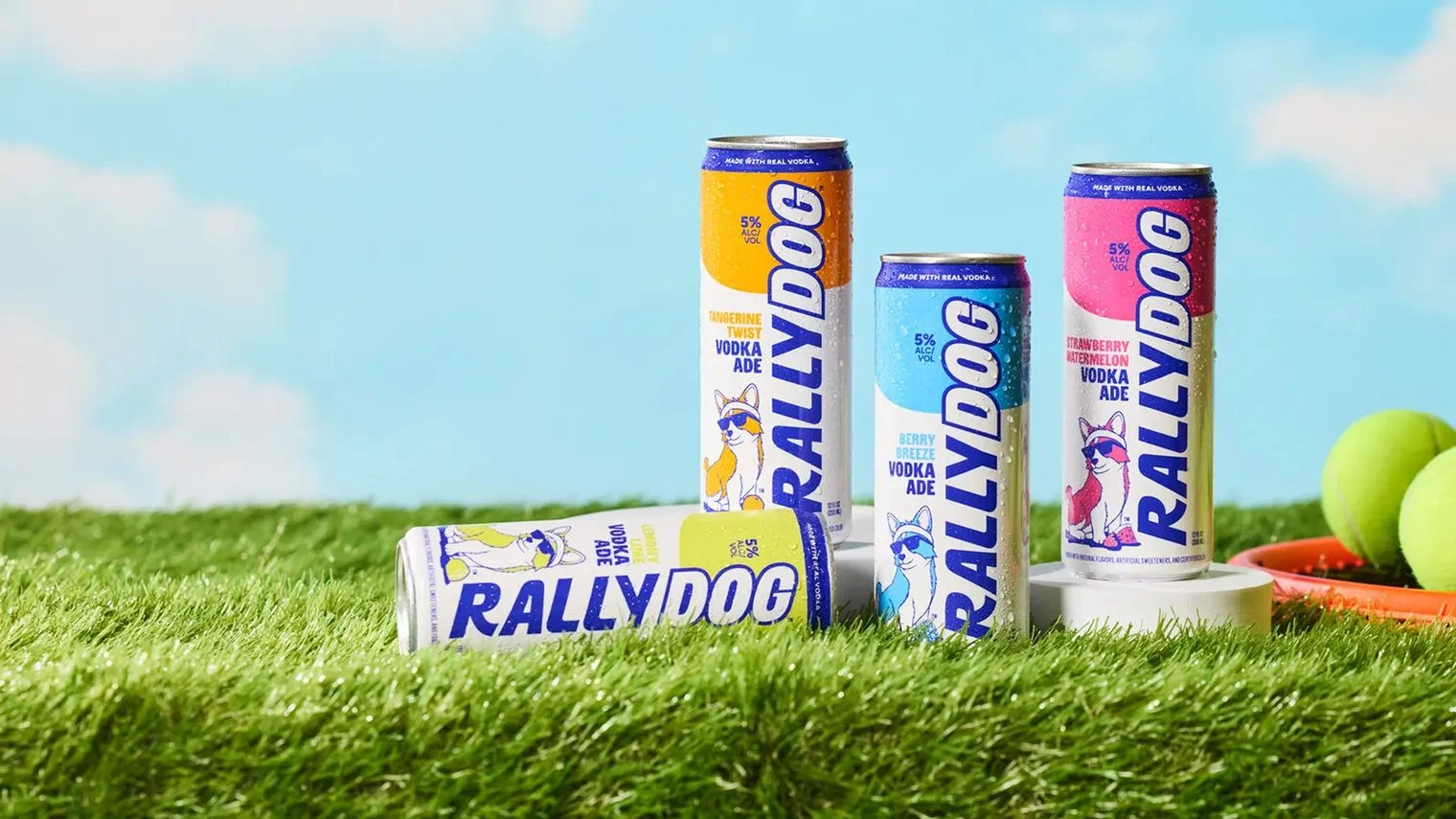
Rally Dog Vodka Ade, launched in August 2026, pairs vodka with electrolytes and sports drink flavors. Its four varieties—Berry Breeze, Tangerine Twist, Lemony Lime, and Strawberry Watermelon—are marketed as low-calorie. The product is available in four states, with Boston Beer planning a nationwide rollout in 2027. For now, that limited availability makes the rollout itself part of the story: the company has a chance to learn how shoppers respond before the product is offered across the country.
The pitch combines two familiar ideas: an alcoholic ready-to-drink cocktail and the bright flavors associated with sports drinks. That familiarity may lower the barrier for consumers who don't identify with beer or traditional hard seltzer. But a recognizable flavor profile is a starting point, not proof that people will buy the product repeatedly. A launch can draw curiosity; a wider rollout asks whether that curiosity can become a regular purchase.
A category drawing major rivals
The company behind Samuel Adams, Truly, and Twisted Tea is entering a category that has moved quickly beyond its New Jersey roots. On Boston Beer’s third-quarter earnings call, CEO Jim Koch said vodka ade had grown “faster” than hard tea and hard seltzer at comparable points in their development. That comparison offers a company leader’s view of the category’s early pace, but it doesn't establish how large vodka ade is today or how long its momentum will last.
“Vodka ade, in a year, has basically gone from this little curiosity primarily in New Jersey to the next big thing in people’s minds,” Koch said.
That description captures both the appeal and the uncertainty. A category can move from regional curiosity to retailer and competitor attention quickly, especially when the product idea is easy to explain. Yet attention is only one stage of building a durable business. Brands still need to earn repeat purchases, find room on crowded shelves, and give consumers a reason to choose them among similar offerings. The source establishes that interest is building; it doesn't yet show whether the category has cleared those hurdles.
Other beverage companies are already staking out positions. Constellation Brands, which owns Modelo, acquired SpikedAde for $75 million. Stateside Brands, maker of Surfside, launched Super Lyte, and Mark Anthony Group, the parent of White Claw, introduced RefreshAde. The range of companies entering the category suggests that the concept is attracting attention from established players with experience in alcoholic drinks. It also means Rally Dog won't have the field to itself as Boston Beer expands distribution.
Here’s the thing: several entrants can help make a category more visible, but they can also make it harder for any one brand to stand apart. The names and flavors may vary; shoppers still have to understand what distinguishes one product from another and decide which one fits their preferences. For companies, the early contest is partly about establishing a clear identity while retailers decide which products deserve space. And yet, a crowded category can also test whether demand is broad enough to support more than one recognizable brand.
Retail interest meets a crowded field
Koch says major retailers have named Rally Dog among their leading bets in the new category. That is a useful signal of commercial interest, but it remains a statement from the company’s CEO rather than a measure of consumer demand. Retailer enthusiasm can help a new product reach shoppers; it can't guarantee that they’ll buy it again. The distinction matters, since a launch can look promising at the shelf before sales patterns become clearer.
Boston Beer is relying on its distribution network, familiar flavors, and branding to stand out as competitors arrive. Those assets may help the company put Rally Dog in front of consumers and make the product easy to recognize. Distribution matters most when it supports availability, while branding matters most when it gives shoppers a reason to pick one option over another. Neither advantage settles whether the product can hold attention after the novelty of a new category wears off.
The concept takes the familiar sports drink formula into alcoholic ready-to-drink cocktails. That could help vodka ade reach consumers drawn to recognizable flavors, though the category’s rapid rise still needs to translate into lasting demand. With companies already competing for shelf space, 2027 will show whether hard sports drinks can sustain momentum or fade like other short-lived beverage fads. The nationwide rollout is therefore more than a distribution milestone: it will put the company’s early read on the category in front of a much broader pool of shoppers.
What the rollout will test
This is more significant than it looks for Boston Beer, because Rally Dog sits at the intersection of two questions: whether the company can find growth in beyond-beer products, and whether vodka ade can move past its initial burst of attention. The available figures don't answer either question. Beyond-beer volume is up 1% year to date, but the category includes more than Rally Dog, and the source doesn't provide the product’s sales or repeat-purchase figures. The launch is a bet, not a verdict.
If you’re working in this space, the practical test is whether the product earns repeat demand after shoppers have tried it once. Similar beverage launches often depend on clear positioning and sustained availability, but those general conditions don't tell us how Rally Dog will perform. Its flavor lineup and low-calorie marketing give the company a defined pitch; the results will depend on how consumers respond once the product reaches more stores and competes directly with the other entrants.
(And this is the part most people overlook.) A fast-growing category can still be a difficult one to enter, because early visibility draws rivals as well as customers. Boston Beer has brand recognition and an established distribution network, but competitors are moving into the same space with products of their own. Rally Dog has to turn those advantages into a reason for shoppers to come back.
Plenty of interest. The tougher test comes after the launch.
That said, the planned 2027 rollout will give Boston Beer a broader opportunity to find out whether its early retail support and flavor-led pitch travel beyond the product’s current four-state footprint. The company will be asking consumers to adopt a new label for a familiar combination: alcohol presented through the taste and cues of sports drinks. If that idea sticks, Rally Dog could give Boston Beer another route into the beyond-beer market. If it doesn't, the company will still have learned something about how far category excitement carries when it meets the everyday choice at the shelf.
Discussion
Sign in to join the discussion.