Learn the water ratios for HARIO and standard donabe pots, plus simple steps for tender, chewy Japanese brown rice.
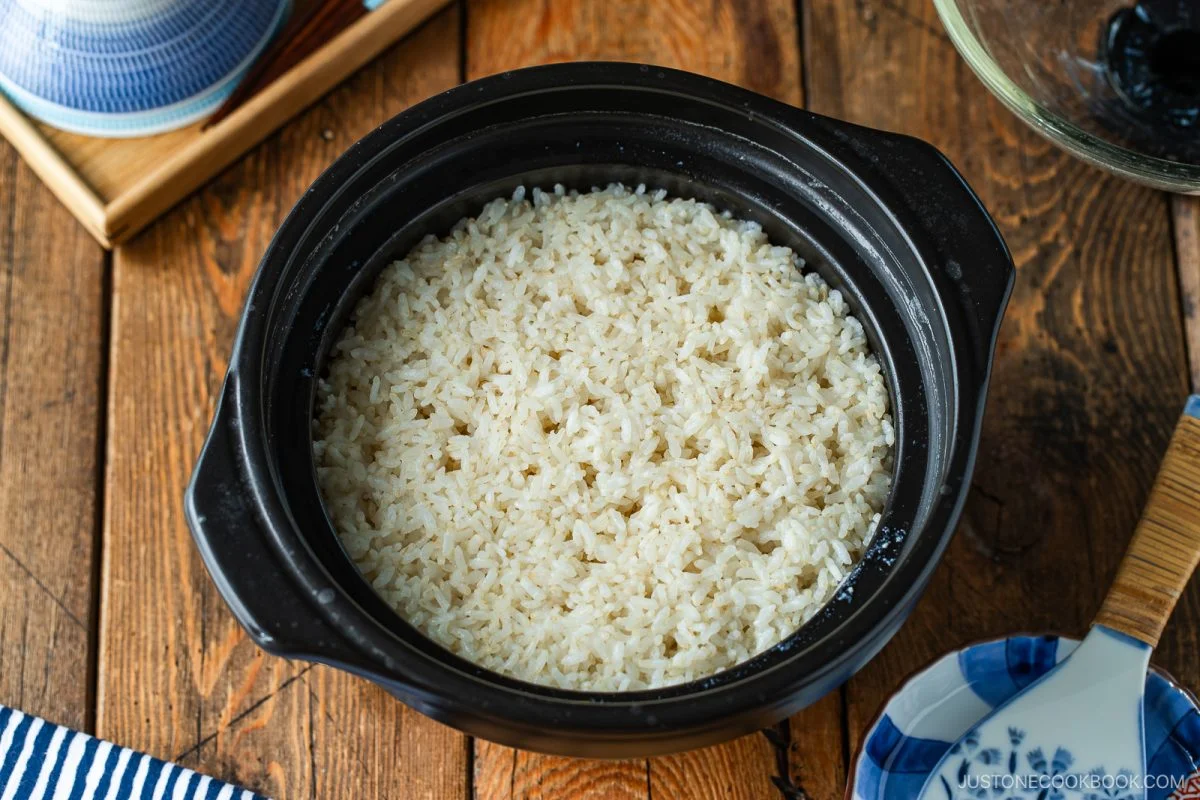
Brown rice is less forgiving than white rice: its intact bran takes longer to soften, and too little water can leave the centers firm. A donabe can make the results tender and pleasantly chewy, but the water ratio depends on the pot. That’s the detail that matters most in this guide.
Namiko Hirasawa Chen, who cooks Japanese short-grain white rice in a HARIO Gohangama daily, shares methods for that pot and for a regular donabe. She says a little salt can soften brown rice’s bitterness. The HARIO’s whistle signals when it’s time to lower the heat, which makes the cooking easier to monitor. For white rice, see her donabe guide; for brown rice, she also has instructions for a rice cooker and an Instant Pot.
Start with the pot’s ratio
For the HARIO Gohangama, the manufacturer recommends one part rice to 1.5 parts water, a ratio Chen says works in her own cooking. One Japanese rice measuring cup, or ichi-go (一合), holds 180 ml—three quarters of a US cup. That makes the HARIO measure 270 ml water per cup of rice: 540 ml for two cups, or 810 ml for three.
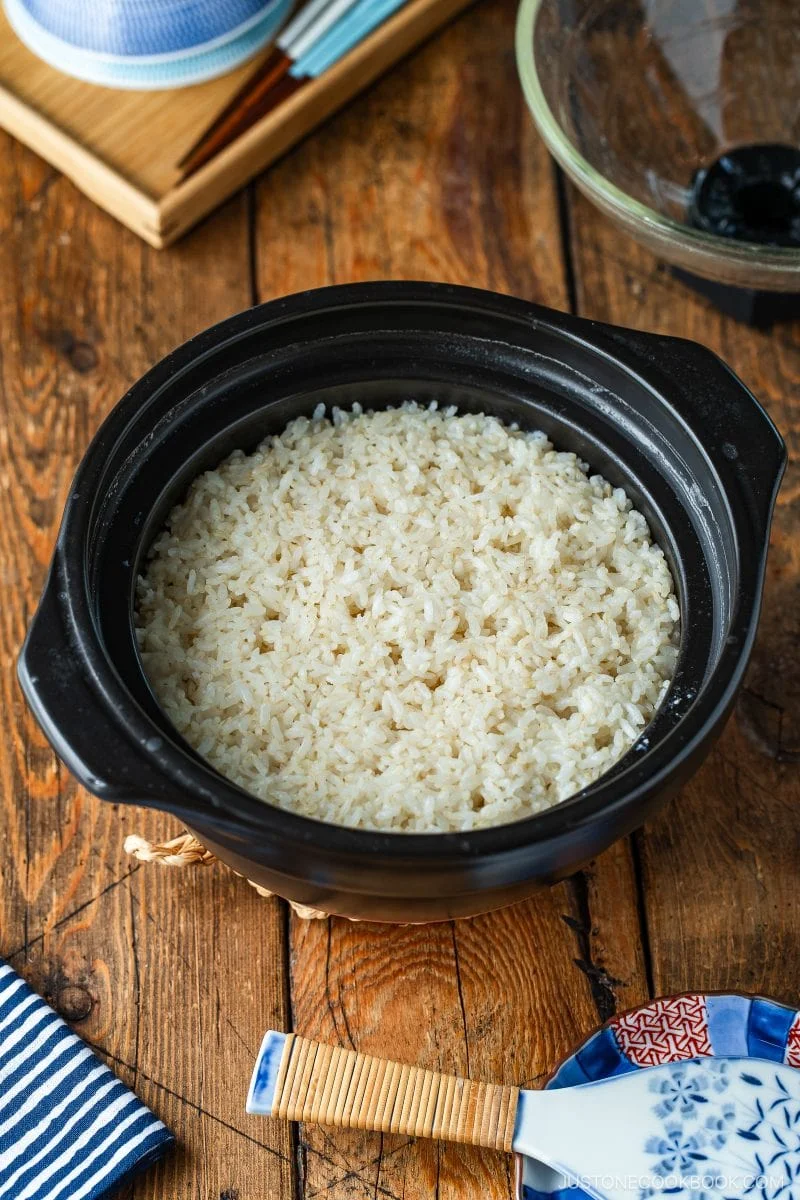
A regular donabe clay pot calls for a little more water. Chen recommends a 1:1.6 ratio: 288 ml water per 180 ml rice. In practical amounts, use about 290 ml for one rice cup, 575 ml for two, and 865 ml for three.
Those figures are starting points. Donabe materials, thickness, lid design, and cooking method affect how much moisture stays in the pot; some absorb more water or release more steam. Adjust slightly to suit your pot and preferred texture. The rice’s longer soak and cook time also give the bran layer time to soften, helping avoid hard centers without turning the grains mushy.
For another view of the finished dish, the article’s second image shows cooked white rice in a black clay pot on a wooden table.
About the recipe
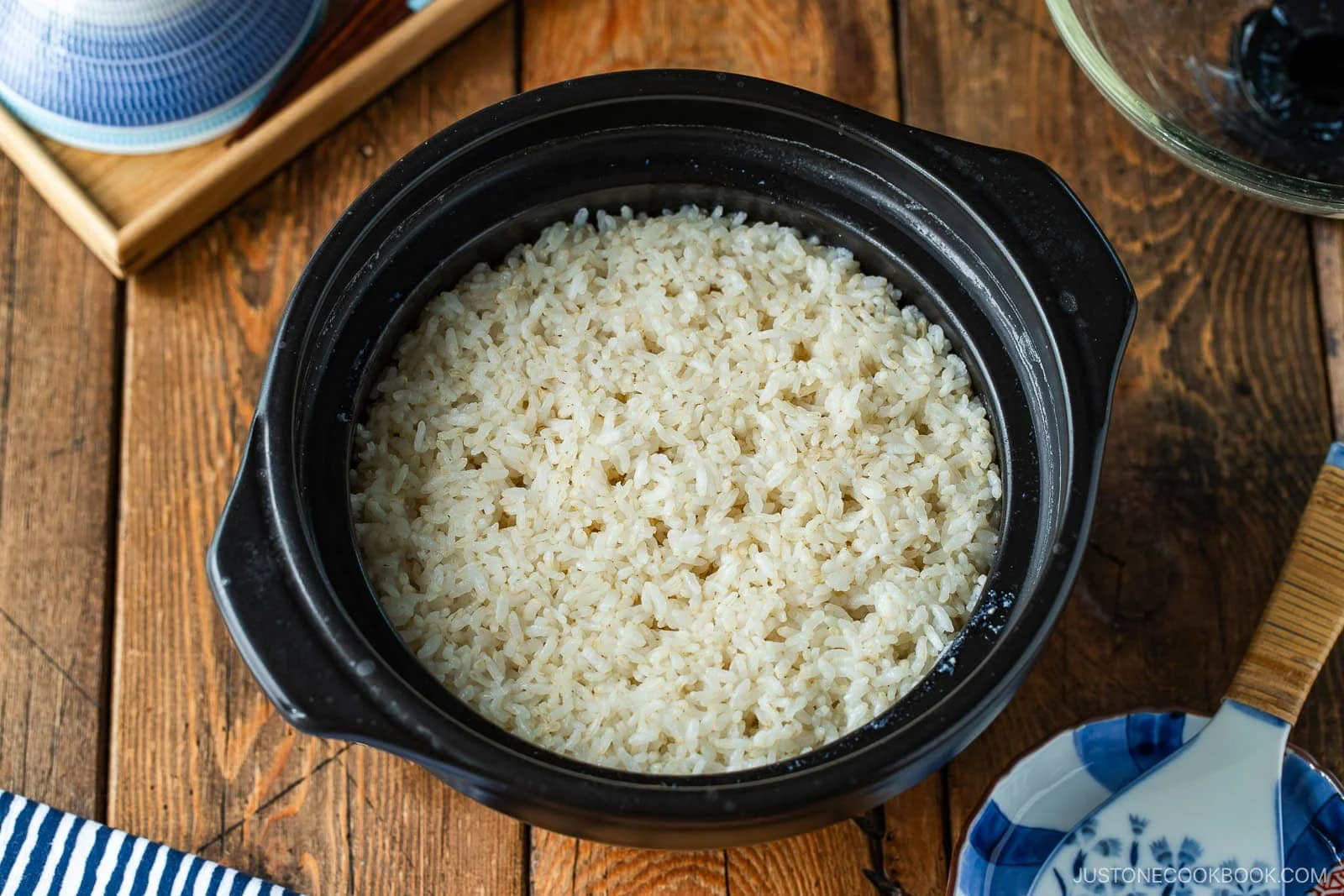
The recipe is for Japanese short-grain brown rice, water, and optional salt. Chen describes the result as mild and nutty, with a tender, slightly chewy bite. The article is by Namiko Hirasawa Chen, published October 19, 2026; it shows zero comments and no user ratings at publication.
For servings, the article points readers to a chart based on uncooked rice; serving sizes and cooked volumes are approximate.
| Dish | 2 rice cooker cups (2合) | 3 rice cooker cups (3合) |
|---|---|---|
| Uncooked rice | 300 g (1½ US cups) | 450 g (2¼ US cups) |
| Cooked yield | 660 g (4⅓ US cups) | 990 g (6⅔ US cups) |
| Rice bowls (150 g, 1 US cup per serving) | 4 | 6 |
| Donburi bowls (250 g, 1⅔ US cups per serving) | 2–3 | 4 |
| Onigiri (110 g, ¾ US cup each) | 6 | 9 |
How to Cook Japanese Brown Rice in a Donabe
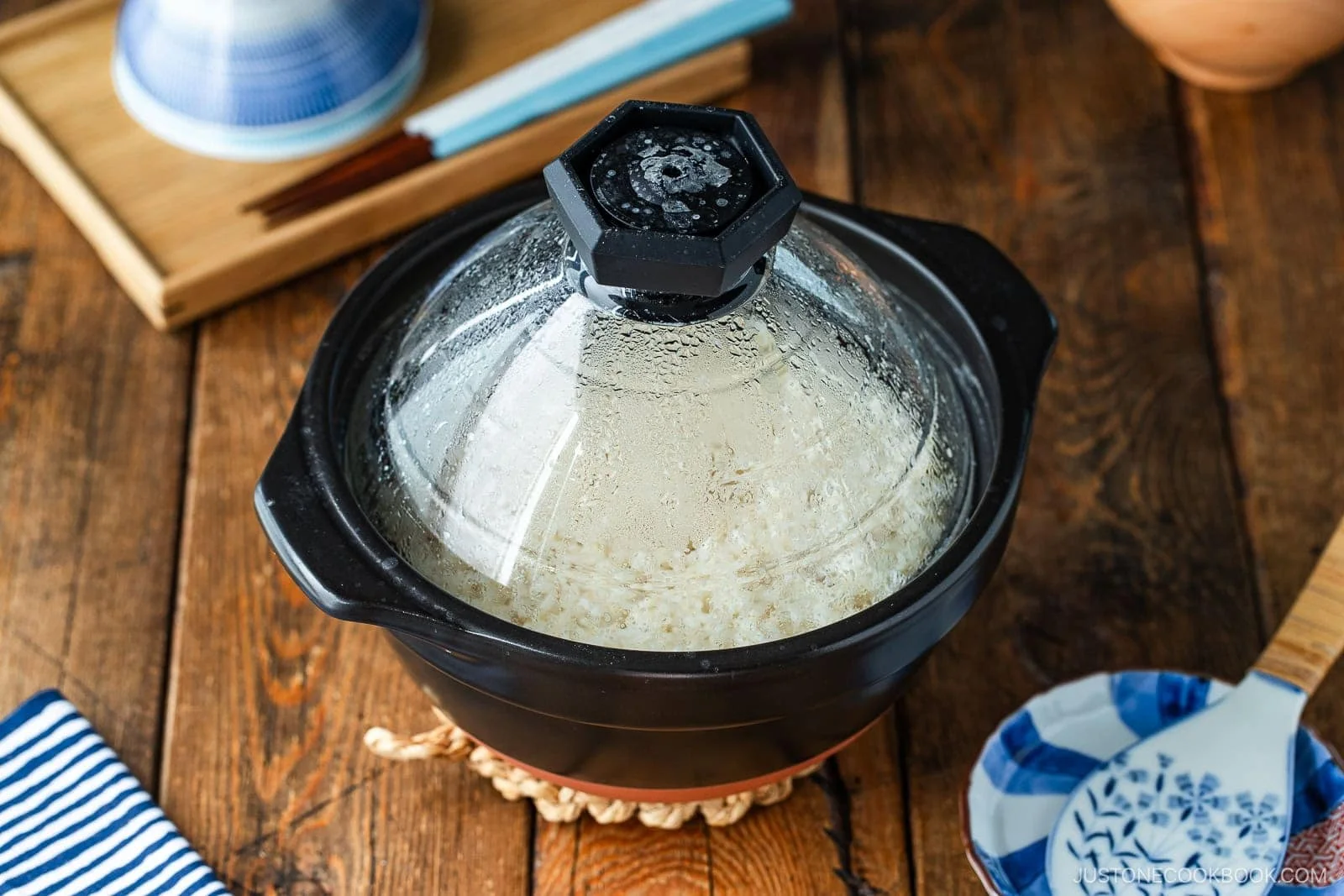
The step-by-step photos feature the HARIO Gohangama; directions for a standard donabe are included, too.
- Measure. Fill and level a rice cooker cup of uncooked Japanese short-grain brown rice. A ¾ US cup measure is an alternative.
- Rinse and drain. Wash the rice gently, repeating until the water is mostly clear, then drain it thoroughly in a fine-mesh sieve.
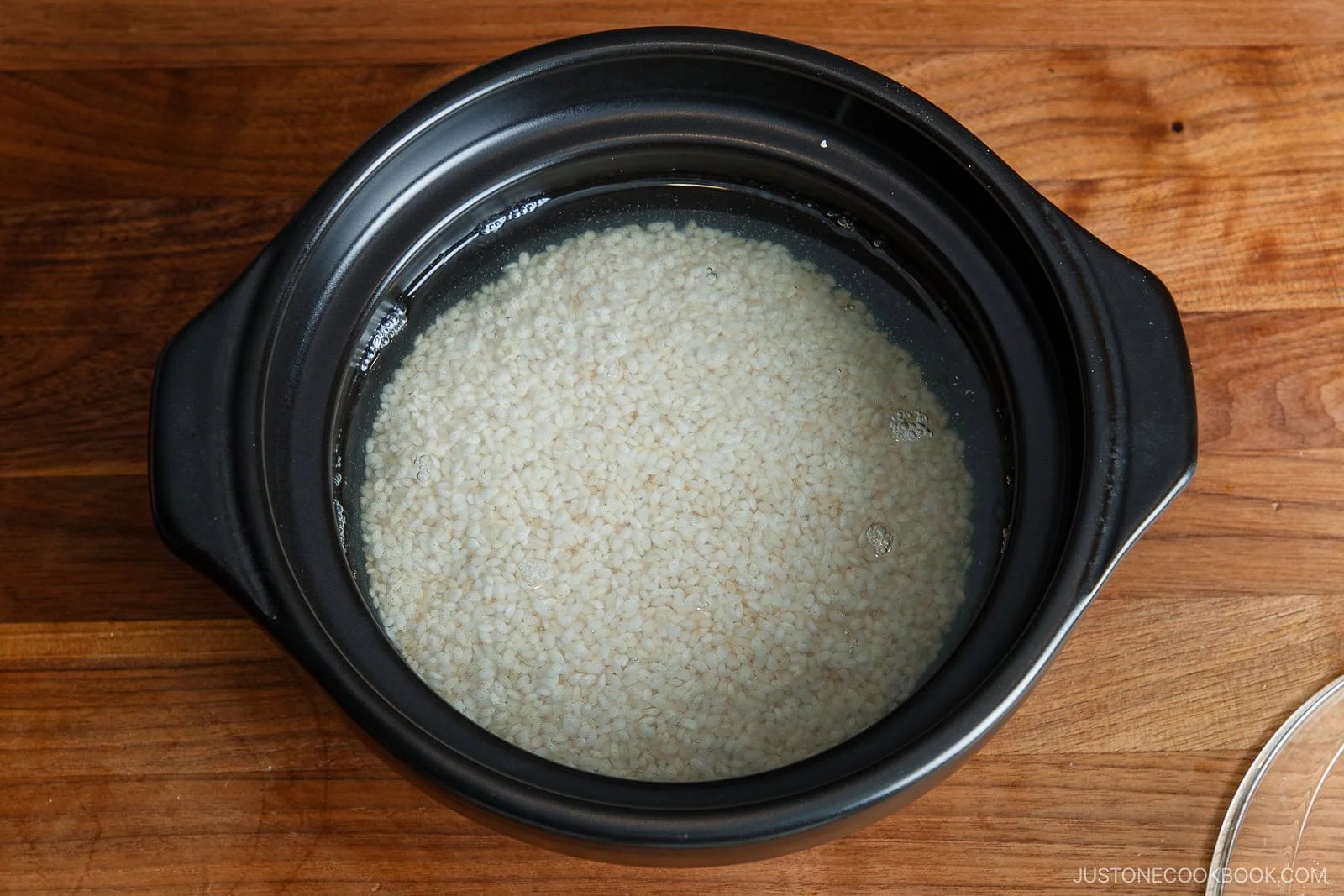
- Soak. Put the drained rice in the donabe, add room-temperature water, and spread the grains into an even layer. Cover and leave to soak for 6–12 hours; choose the longer end in winter, when the water is colder. For a double-lid pot, turn the lids so their steam holes sit 90 degrees apart.
- Cook on the stovetop.
- HARIO Gohangama
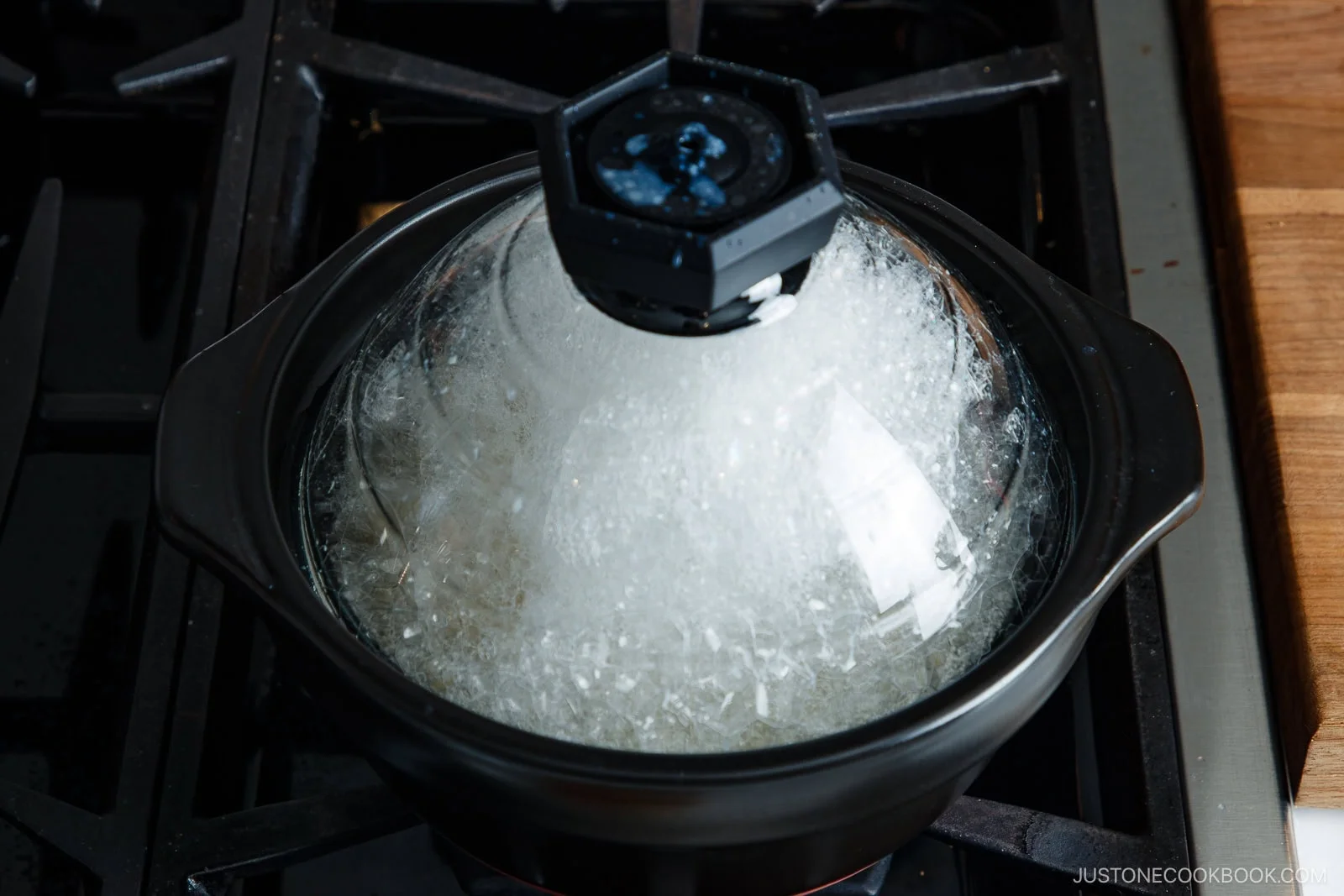
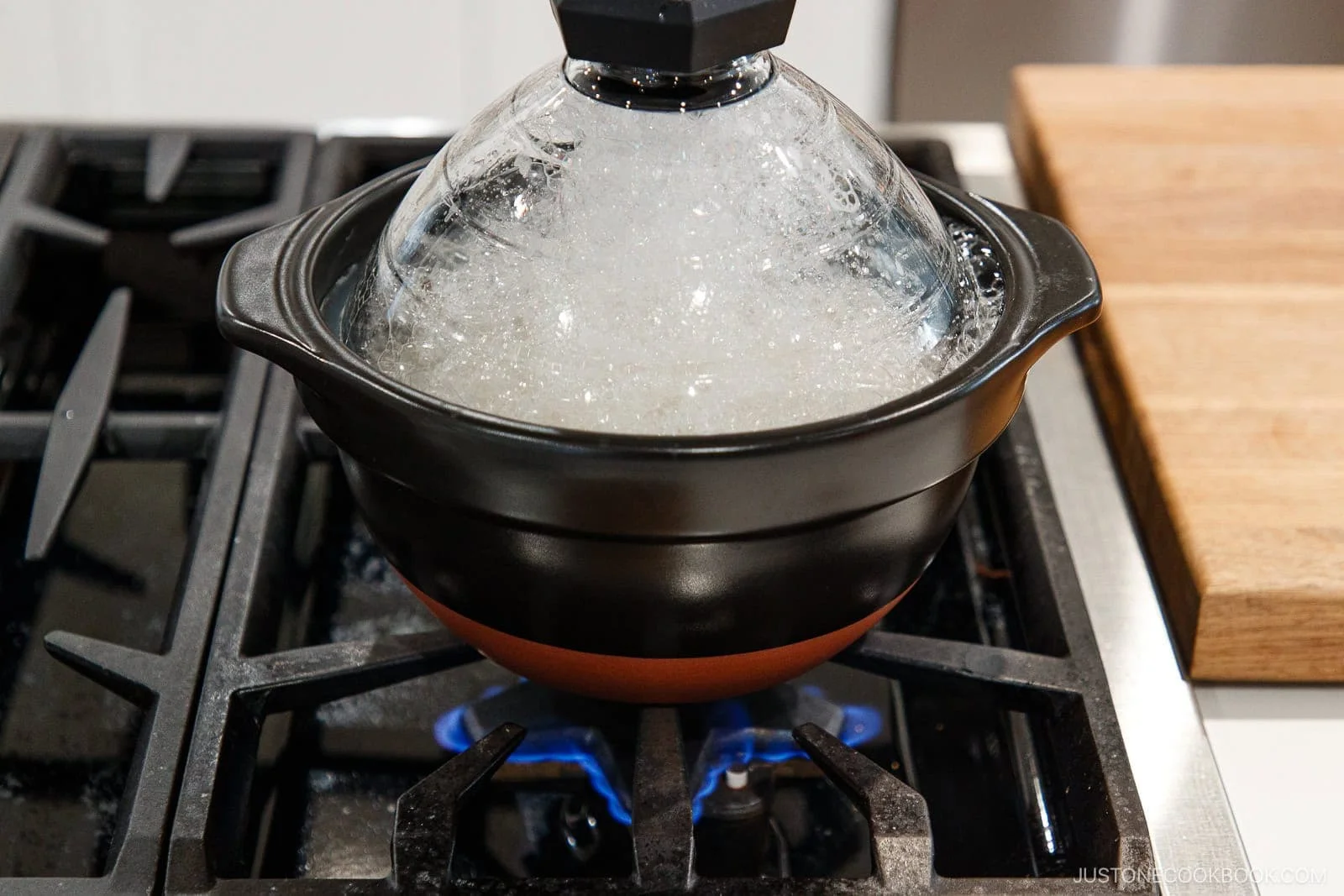
- Use medium-high to high heat until the pot whistles, usually 10–13 minutes.
- Turn the heat to low and cook for 20 minutes.
- Regular Donabe Rice Cooker
- Cook over medium heat until steam pours out steadily, about 12–16 minutes.
- Lower the heat and cook for 25–30 minutes.
- HARIO Gohangama
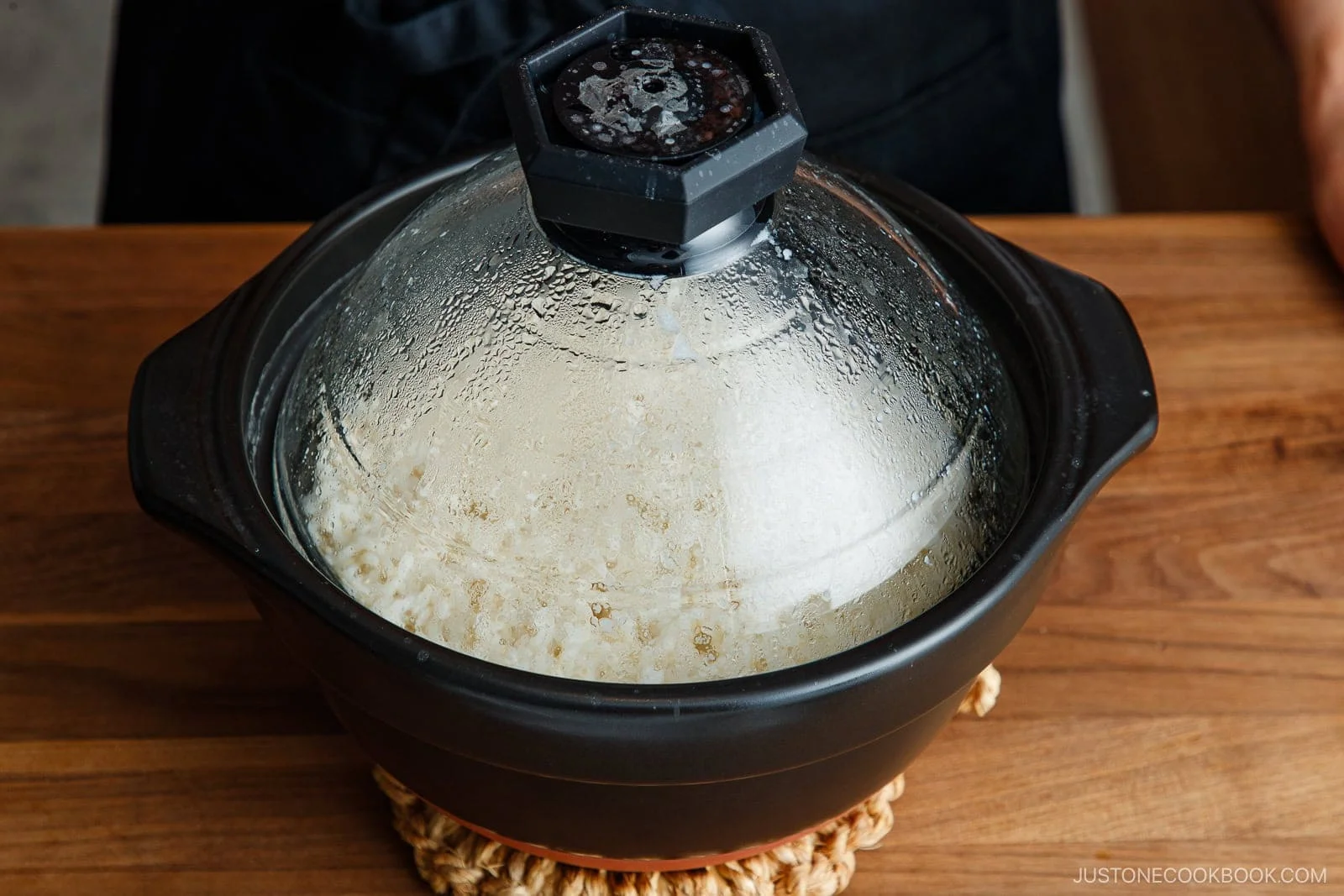
- Rest, then fluff. Take the pot off the heat and leave it covered for 20 minutes. With a damp rice paddle, lift and fold the rice from the bottom to let excess moisture escape.

Nami’s Recipe Tips
These small details make a noticeable difference when cooking brown rice in a donabe.
- Rinse lightly. Several gentle washes remove dust and loose bran. Scrubbing hard isn’t needed; the bran layer remains on the grains.
- Give the rice time to soak. The bran slows water absorption. A long soak helps the grains cook through evenly instead of leaving a firm center.
- Refrigerate a long soak. For several hours of soaking, particularly in warm weather, keep the rice in the refrigerator. Some clay pots can absorb moisture during an extended soak, which may raise the chance of cracking or leaking. Before cooking, move the rice and all its soaking water into the donabe so the water ratio stays right.
- Dry the pot’s base. Wipe the outside bottom completely dry before placing the donabe on heat; moisture there can crack the clay.
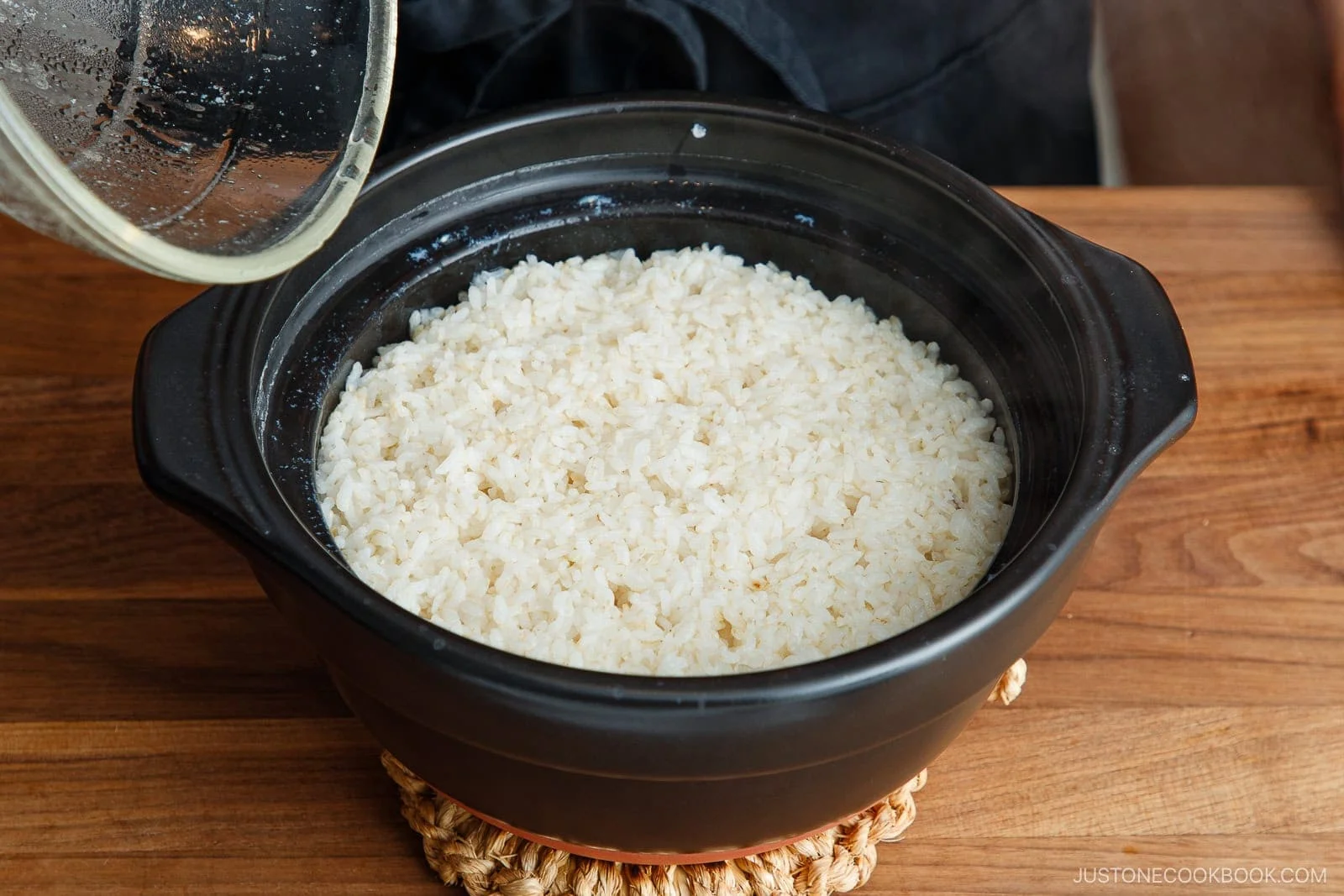
- Watch for kani-ana (カニ穴). Steam bubbles can leave small “crab holes” in the rice, traditionally seen in Japan as a sign of a good cook. Their absence doesn’t mean anything has gone wrong.
- Keep the lid shut. Lifting it during the covered rest lets steam escape and can leave the rice unevenly cooked.
- Tune the water to your rice. Brown rice varies by brand. If your batch is too soft, reduce the water next time; if it’s too firm, add a little more.
- Make at least two cups. The author finds that cooking 2–3 rice cooker cups tastes better than making just one. Extra portions can be frozen individually, even if you’re cooking for one.
Storage and Reheating Tips
Storage: While the rice is hot, portion it into microwave-safe glass containers to help preserve moisture. Cool it promptly and freeze for up to one month. Freezing usually preserves the texture better than refrigeration, which can leave rice dry and firm. If you do refrigerate it, use a microwave-safe ohitsu rice container.
Reheating: Take off the lid, cover frozen rice with a damp paper towel, and microwave until steaming hot throughout. Timing depends on serving size and microwave wattage. You can also steam it uncovered in a suitable heat-safe container over simmering water for about 10 minutes, or until hot, using a steamer basket.
Food safety: Cool cooked rice quickly, then refrigerate or freeze it promptly. Rice left at room temperature for too long can allow harmful bacteria to grow.
FAQ
Why do I recommend HARIO Gohangama?
The HARIO Gohangama is the author’s preferred donabe, thanks to its built-in whistle and transparent glass lid. The whistle signals when to switch off the heat for white rice or lower it for brown rice, and the lid makes it possible to watch the cooking without releasing steam. Together, those features reduce guesswork.
Does a donabe need seasoning before its first use?
That depends on the pot. Some donabe need seasoning and others don’t, so check the maker’s instructions. The How to Season Your Donabe guide has step-by-step directions and care advice.
Share how your rice turned out with a star rating and comment. Your feedback supports Just One Cookbook and helps other home cooks find recipes they can trust. 💛

Discussion
Sign in to join the discussion.