Understanding bar lingo can enhance your ordering experience. Familiarize yourself with key terminology to communicate your drink preferences effectively.
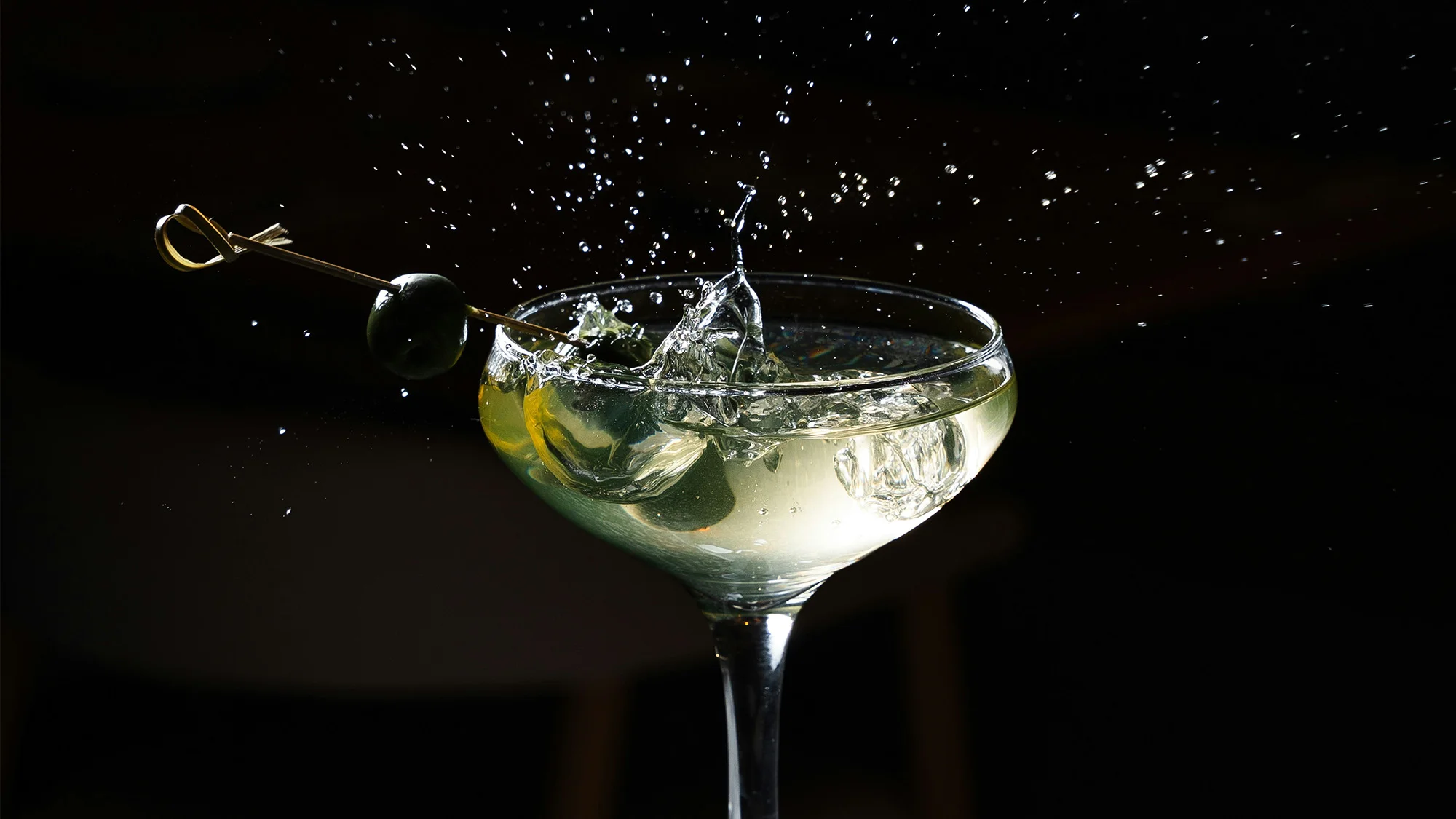
Bartenders and patrons often engage in a unique dialogue, especially in bustling bars. While some phrases might seem eccentric, terms like “dry,” “neat,” and “on the rocks” are essential to grasp for anyone looking to enjoy a drink. The meanings of these terms can vary significantly from their everyday definitions, which is why it’s useful to decode this bar jargon.
To help both drinkers and bartenders navigate these commonly used phrases, here’s a breakdown of 15 essential bar calls. Understanding these terms can not only simplify your ordering process but also enhance your overall bar experience.
Decoding Common Bar Calls
Dirty
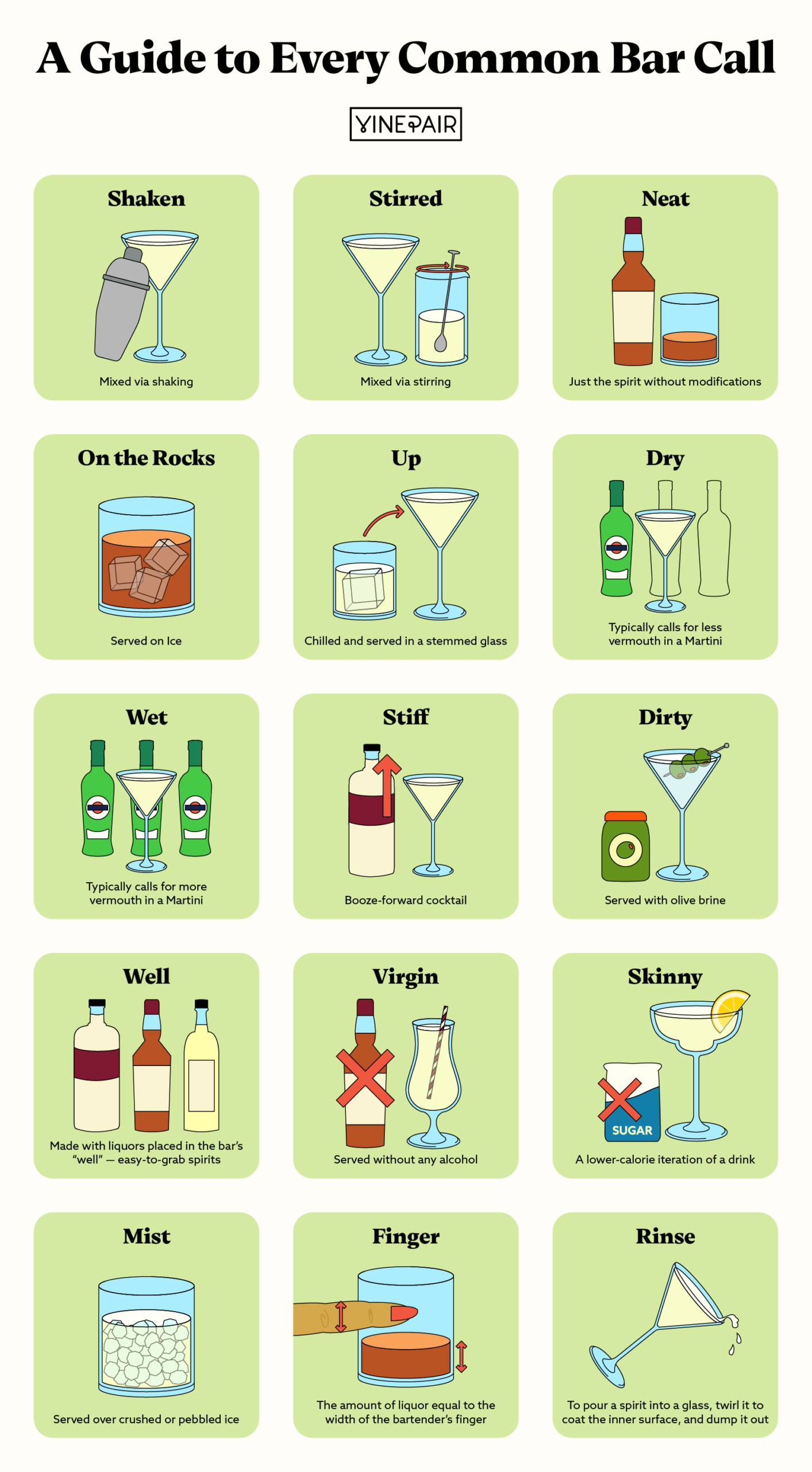
Primarily associated with Martinis, ordering a drink “dirty” means adding olive juice to the mix. Patrons might specify their desired level of olive flavor with terms like “a little dirty” or “extra dirty.”
Dry
The term “dry” can be misleading since it refers to sweetness rather than liquid state. In the context of a Martini, requesting a “dry” drink means you prefer less vermouth, resulting in a drink that's more spirit-forward. Variations include terms like “extra dry” or “bone dry” for minimal to no vermouth.
Finger
A “finger” serves as a casual measurement of liquor, defined by the width of the bartender’s finger. When a customer asks for a “finger of whiskey,” they want a pour that aligns with the height of the finger laid horizontally at the bottom of the glass.
Mist
Ordering a drink “mist” means serving it over crushed ice. This can change the drink’s texture and sensation, with options like “vodka mist” or “whiskey on a mist” adding a unique dimension to the experience.
Neat
A “neat” drink is served at room temperature, free from ice or mixers. This straightforward order allows spirits to shine in their purest form.
On the Rocks
To enjoy a drink “on the rocks” means it will be served with ice, typically in a rocks glass. This results in a chilled drink that gradually dilutes with time.
Rinse
In cocktail preparation, a “rinse” involves coating the inside of a glass with a small amount of strong liquor. Although the liquor may be discarded, it adds complexity to the flavor of the final drink — often enhancing cocktails with spirits like absinthe.
Shaken
When a drink is “shaken,” it involves mixing the ingredients in a cocktail shaker. This method is favored for drinks containing citrus, producing a frothy, effervescent texture, as seen in cocktails like the Whiskey Sour.
Skinny
A “skinny” order requests a drink made with fewer calories, achieved by reducing sugary ingredients. This term is often used for lighter versions of classic cocktails, like the Skinny Margarita.
Stiff
When you order a “stiff” drink, you’re looking for a stronger cocktail. This typically means increasing the spirit quantity or reducing the amount of mixers to create a more potent drink.
Stirred
In contrast to a shaken drink, “stirred” cocktails are mixed in a glass instead of a shaker, yielding a creamier texture without the bubbles. Classic examples include drinks like the Negroni and Old Fashioned.
Up
Ordering a drink “up” indicates that it should be served in a stemmed glass, typically after being shaken or stirred with ice and then strained. This presentation differs from a rocks glass, highlighting the cocktail’s elegance.
Virgin
A “virgin” drink contains no alcohol, suitable for those opting out of spirits. Common examples include zero-proof versions of popular cocktails like the Mojito and Piña Colada.
Well
A “well” drink consists of the house spirits, easily accessible behind the bar. They are often budget-friendly options, used in simple cocktails like a Vodka Soda or Rum and Coke.
Wet
The term “wet” signifies a drink that includes a generous amount of vermouth. For those ordering a Martini, specifying “wet” informs the bartender to enhance the vermouth presence in the drink.
*Image retrieved from Isabella Kara via unsplash.com
For more insights and a visual representation, check out the article Navigating Bar Calls: A Guide on VinePair.

Discussion
Sign in to join the discussion.